A Covenant 141 Years in the Making: Global Methodists Sign Ecumenical Covenant with Korean Methodist Church

Tyler Best • September 3, 2026

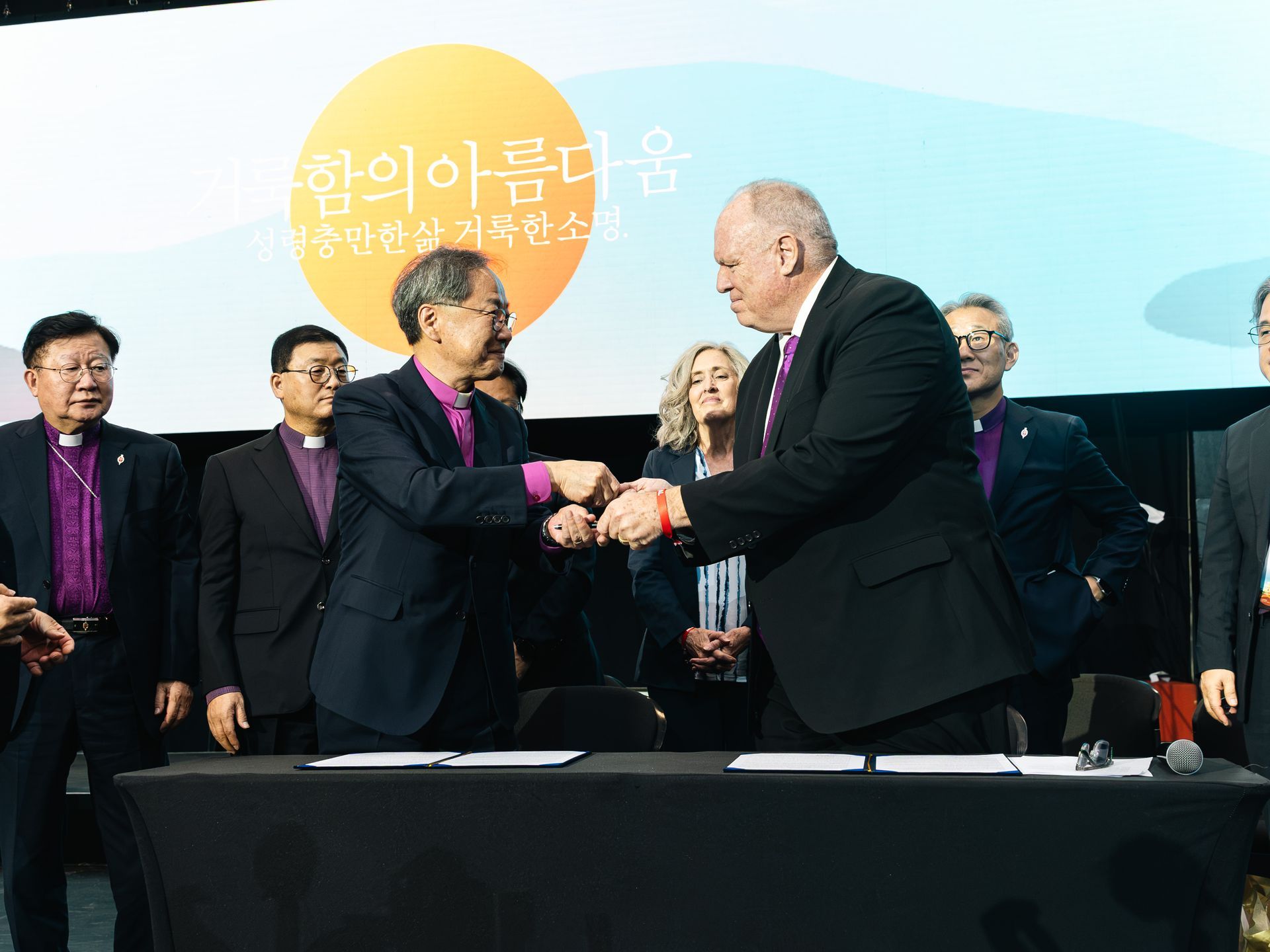
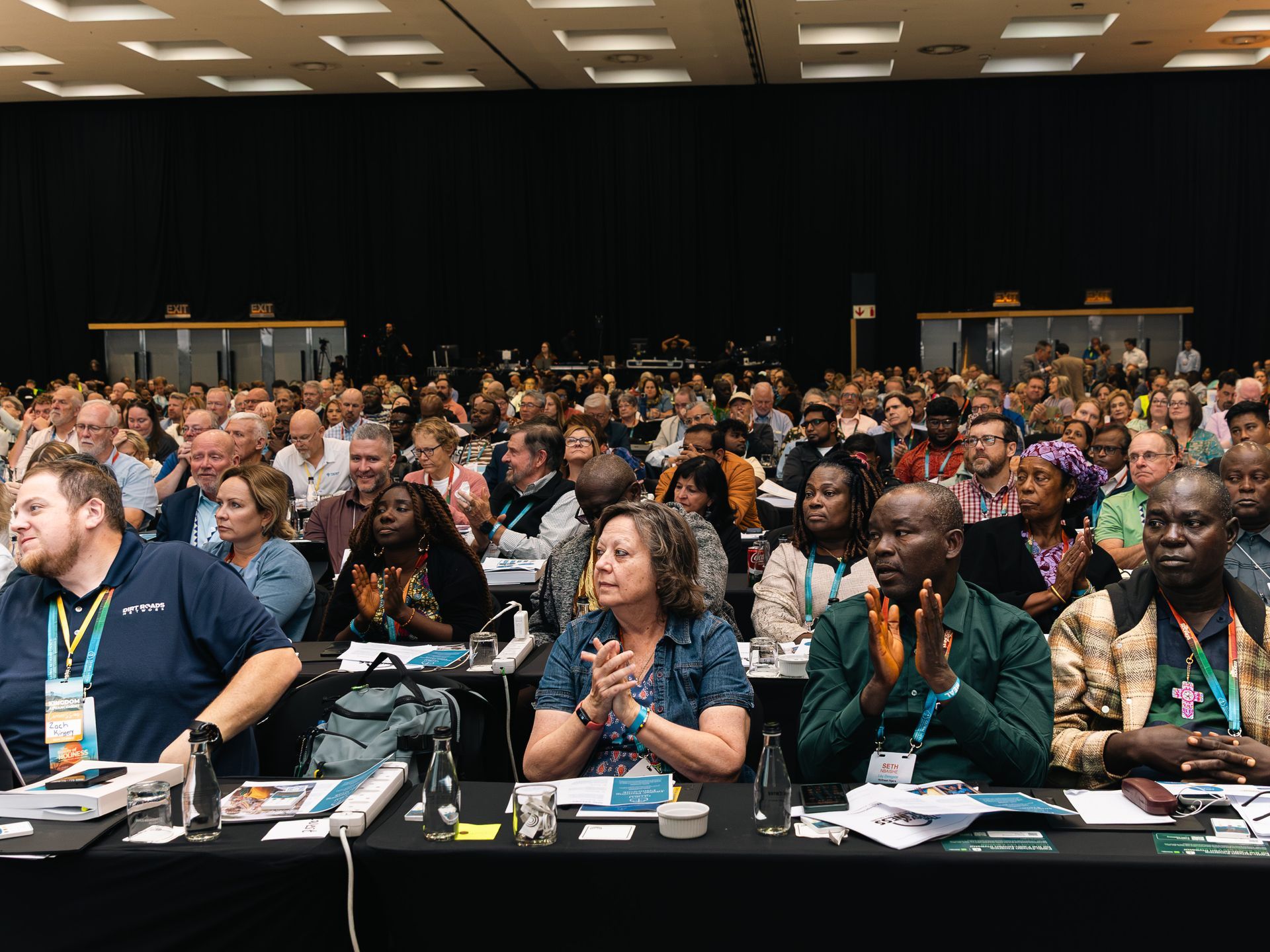
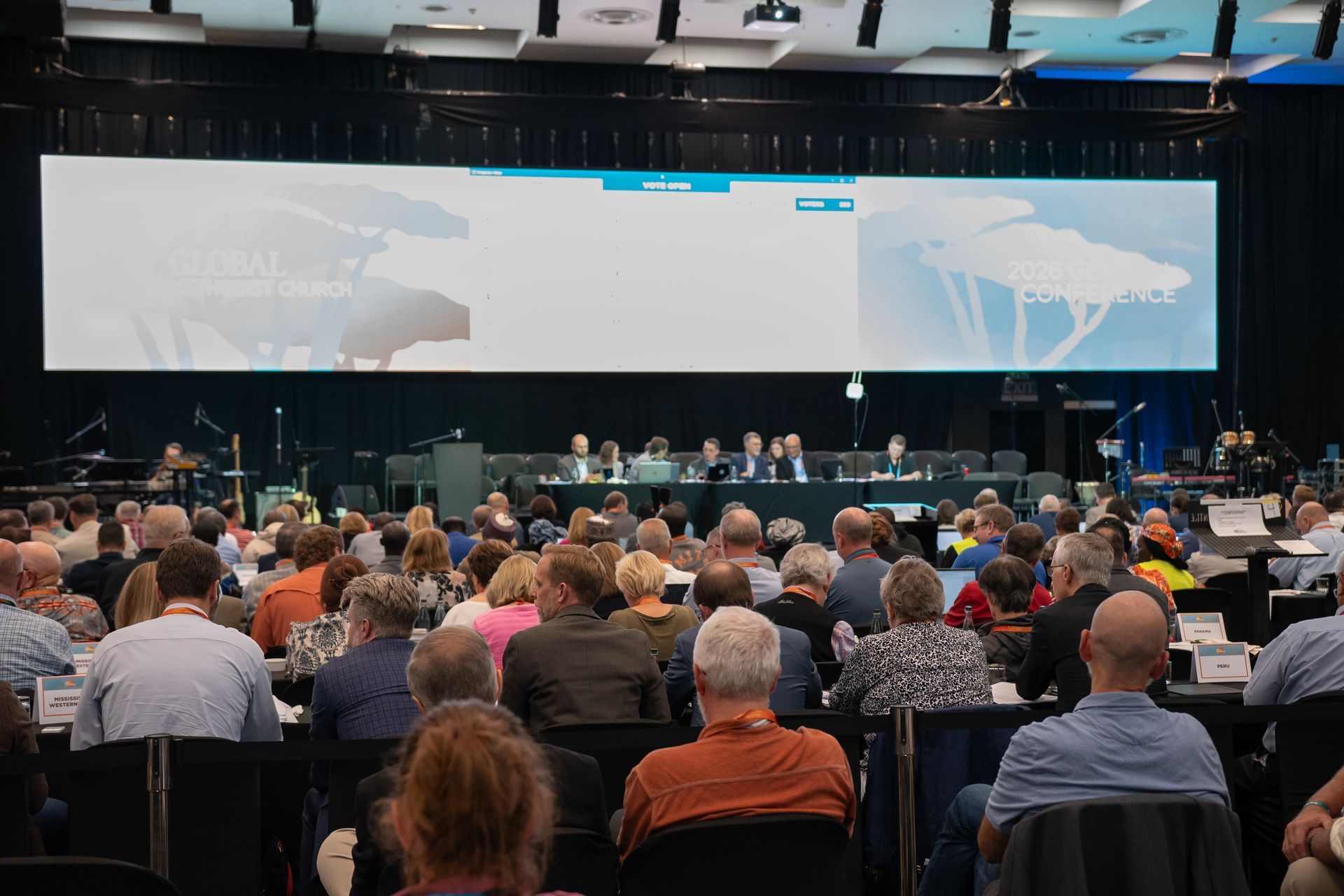
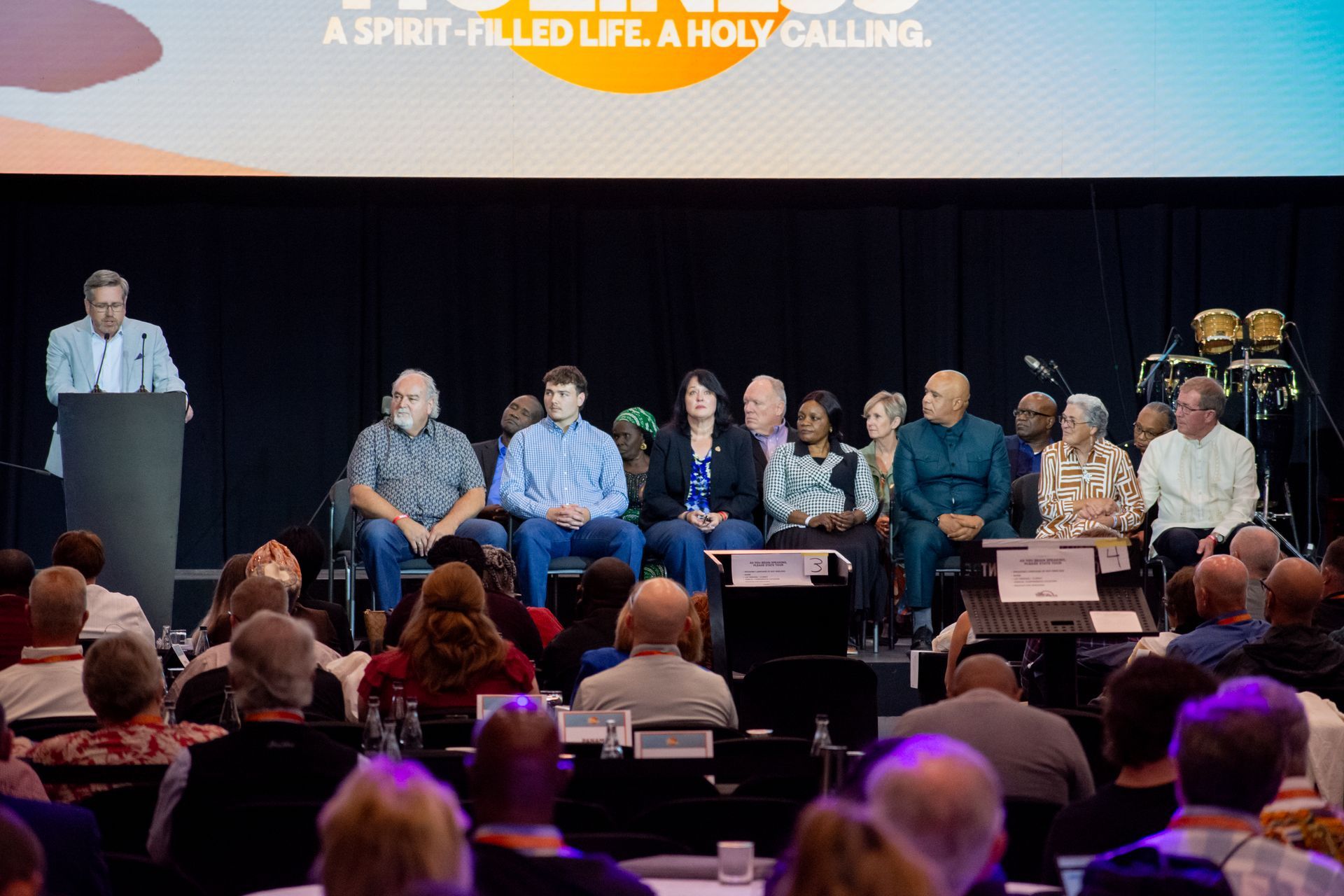
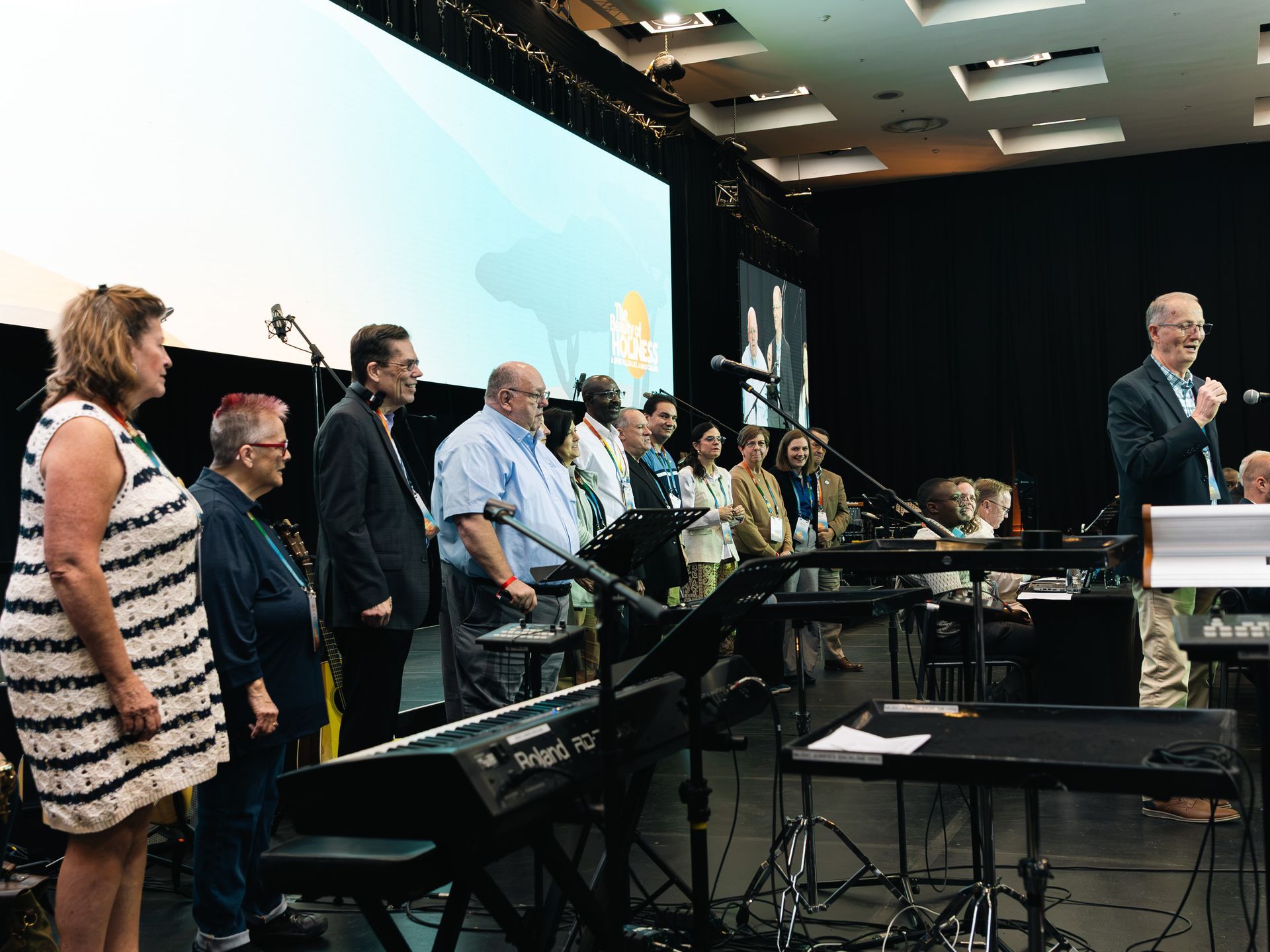
On the fifth day of the General Conference of the Global Methodist Church, delegates set aside the ordinary work of a legislative body to witness the signing of an ecumenical covenant with the Korean Methodist Church – a document the Conference had passed unanimously the day before, and a relationship that reaches back more than a century.


“It was truly an honor to have such a strong delegation with us from the Korean Methodist Church,” Bishop Carolyn Moore reflected. The delegation was itself part of the story. 


Six bishops of the Korean Methodist Church came alongside their president bishop, Kim Jung-seok — a gathering the conference was told is without precedent. Never before have so many Korean Methodist bishops visited a sister denomination's ceneral conference together with the president bishop. Their presence made plain how seriously the Korean church regards this new relationship. They were joined by the general secretary of the Korean Methodist Mission Department and the executive pastor of Seoul's Kwanglim Methodist Church, one of the largest Methodist congregations in the world.


Bishop Jeff Greenway introduced the guests and the covenant, an assignment that carries a personal history. Years ago, while president of Asbury Theological Seminary, the late Bishop Kim Sundo – founder of Kwanglim – introduced Greenway to the bishop's son, Kim Jung-seok, and the two became friends. That son now pastors Kwanglim and leads the Korean Methodist Church. Last October, Greenway carried the possibility of a covenant to him, attending the Korean General Conference on behalf of the Assembly of Bishops, where the Korean church ratified the agreement's language.


The covenant does not create a bond so much as it names one. The first resident missionaries of the Methodist Episcopal Church, the Reverend Henry Gerhard Appenzeller and his wife, Ella Dodge Appenzeller, stepped ashore at Jemulpo — present-day Incheon — on April 5, 1885. It was Easter Sunday, 141 years ago. Appenzeller gave himself to education, evangelism, and Bible translation, founding the school that grew into Pai Chai Hakdang. That same year, Mary Fletcher Scranton arrived and began teaching Korean girls, establishing what became Ewha Womans University.


In the century and a half since, the Korean Methodist Church has flourished into one of the great centers of Methodism. Jung-seok described a church of nearly 6,700 congregations, some 10,000 pastors, and 1,400 missionaries sent across the world. Most Methodists in the Global Methodist Church's Korean American Conference can trace their heritage directly to it.


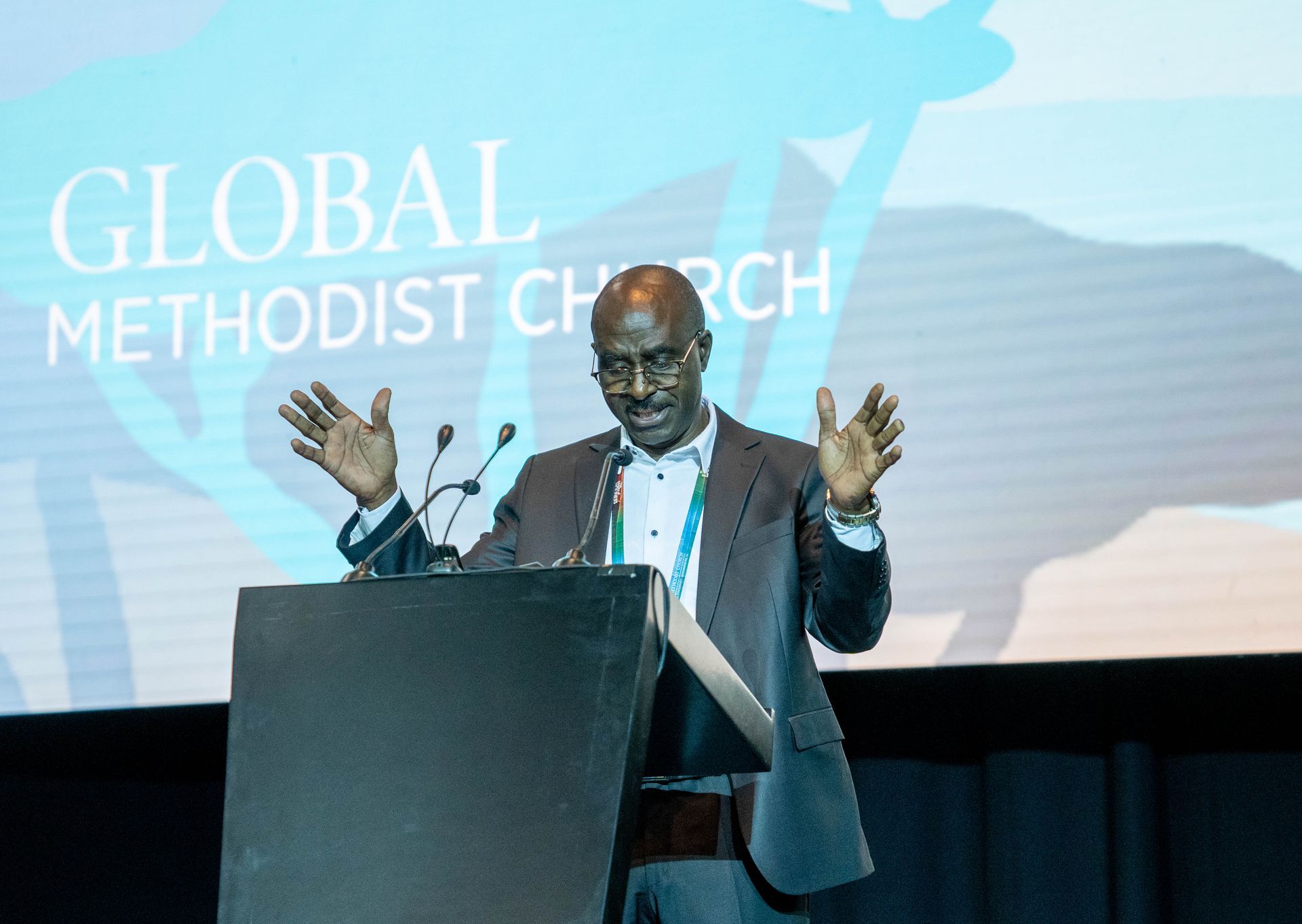
Speaking to the assembly, Jung-seok reached back to that first Easter arrival and forward to the church's calling now – a mission that transcends denomination, moving from personal to social holiness in the spirit of John Wesley. “It is my sincere hope," he said, "that our Methodist churches will remain partners eternally.”


The Korean signing stood alongside the Conference's covenant relationships with the Methodist churches of Costa Rica and Nigeria, whose representatives were welcomed as witnesses. 


Moore set the partnership in that larger context. “Our relationships within the global church are important,” she said. 

“They are how we engage in conversations about the advance of Christianity and how we care for and support the Body of Christ, especially in those places where the Church is persecuted and needs the encouragement of the larger Body. In this spirit, we have entered into this special relationship with the Korean Methodist Church. We recognize that all our covenant relationships are lived out in the local church, as our churches partner together to build relationships.”


Greenway and a group of Global Methodists will represent the GMC at the Korean Methodist General Conference later this year to sign the same covenant before their delegation. 


“These acts of unity are one way we can participate in making the Bride of Christ ready for his return,” said Moore.


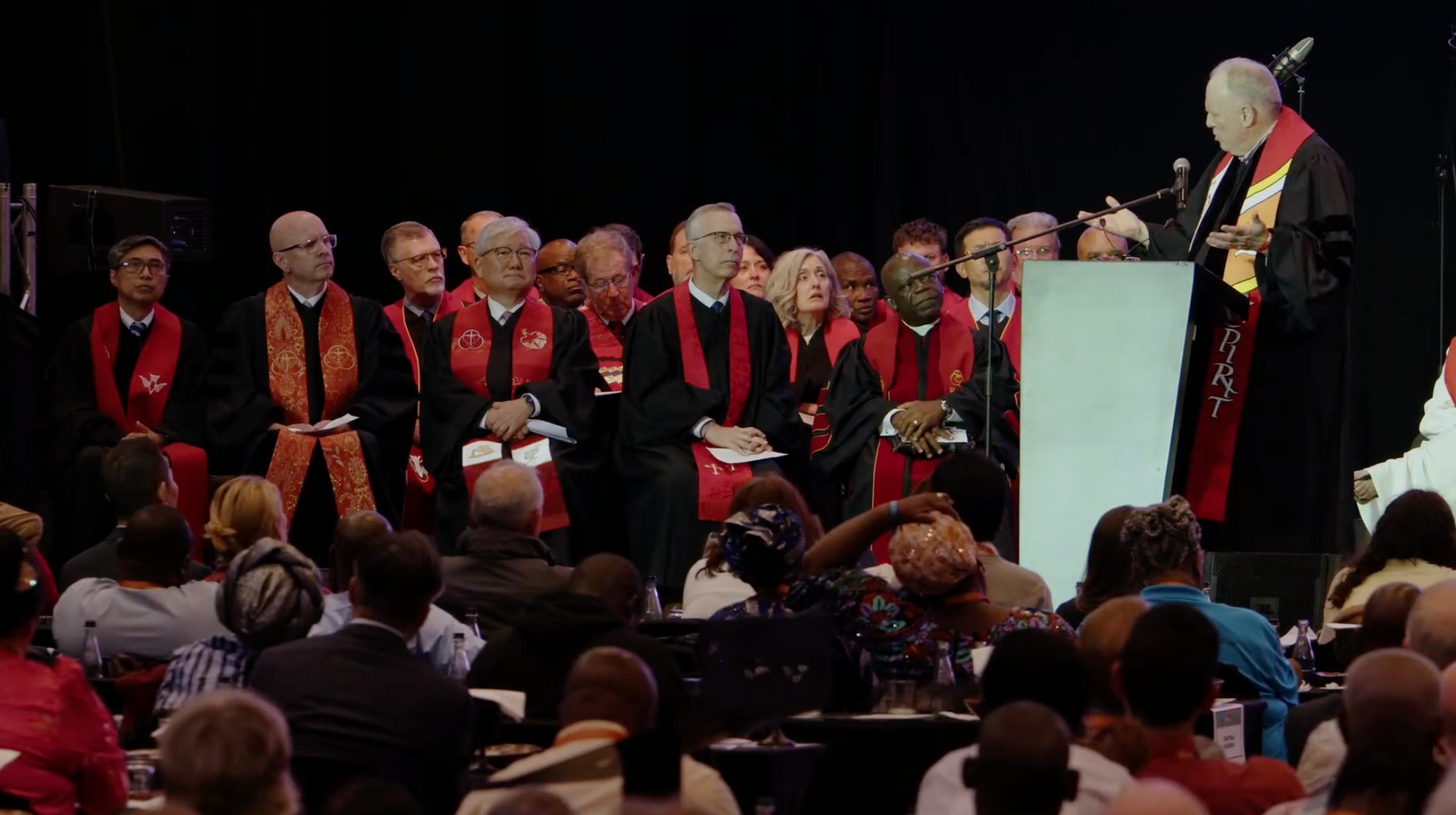
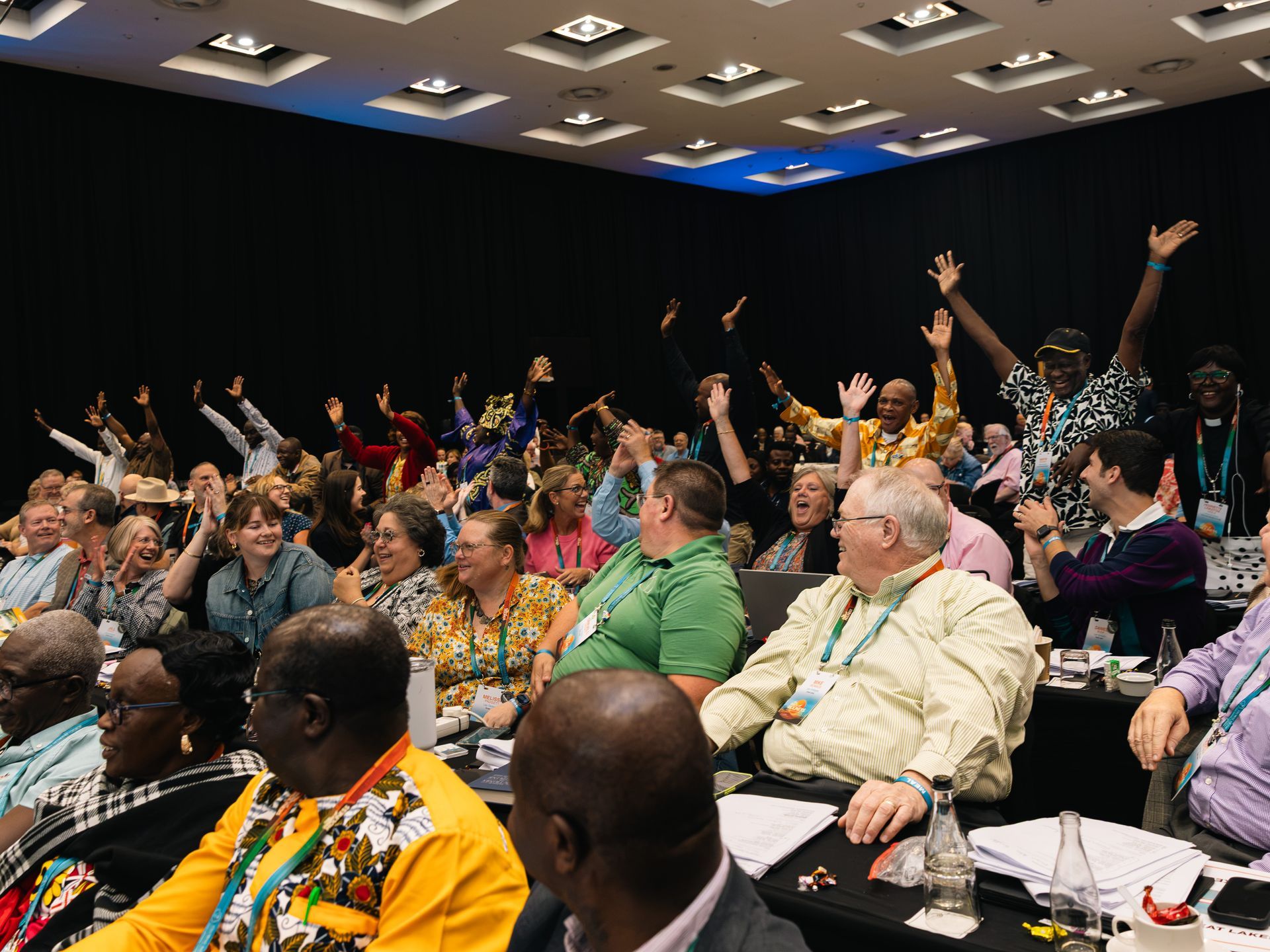
The assembly extended its hands toward the guests and prayed a blessing over the covenant now begun, asking that what was signed on earth be ratified in heaven. What began 141 years ago on an Easter morning at Incheon had, in Johannesburg, been carried one step further along the same road.


Related Posts

By Tyler Best September 3, 2026
As the hour grew late in Johannesburg, the Global Methodist Church gathered in the ballroom of the Sandton Convention Centre, rose, and sang “Great Is Thy Faithfulness” together. Only then, with the room settled into gratitude, did the General Conference turn to the evening's purpose — to honor the bishops who have carried the Church through its founding years and now enter the ranks of its Bishops Emeriti. The tribute opened with a reflection on what the office has asked of these servants. “The word bishop ,” Chris Ritter, Chair of the Global Episcopacy Committee, reminded, “comes from the New Testament episkopos — an overseer entrusted with watching over the life of the Church.” But these bishops did not inherit a settled connection; they helped shepherd a new thing into being. Their service carried them across nations, continents, and time zones, often to places difficult to reach and at times where travel involved real physical risk — far from home and at considerable personal cost, borne by some even amid significant health challenges. That sacrifice, Ritter was careful to say, was not the bishops' alone; gratitude was offered to their spouses, who shared in this ministry in ways both visible and unseen. They were honored, too, for the quieter labor of forming a denomination — tending wounds, building relationships, reconciling differences, and helping a young connection find a faithful way forward. To become a Bishop Emeritus, the conference noted, is not merely to receive a title for past service, but to enter a new relationship with the Church as a treasured source of wisdom and counsel. If the formal tribute spoke for the Church, Mike Schafer spoke as a witness. The Church's Connectional Operations Officer confessed, with some humor, that the Book of Doctrines and Discipline gave him no role among the bishops — “my job description has nothing to do with these people” — yet they had invited him into their world and let him watch them work. Turning to the six completing their active service — Bishops John Pena Auta, Kimba Evariste, Jeffrey Greenway, Leah Gregory, Scott Jones and Kenneth Levingston — Schafer set aside his notes: “I'm going to miss you being in the room. I'm going to miss your voices of wisdom, your love for Jesus, and the way you model leadership.” Jones, a founding bishop, represented those retiring. An ordained Methodist preacher for forty-eight years, he offered a striking testimony: “The last four years have been the best years of my ministry.” He named three marks of the Assembly's life together — trust, alignment, and a spirituality that helped even seasoned leaders grow deeper and pray better than ever before. But the greatest blessing, he insisted, had been the people themselves. The evening's central symbol carried its own story. When the Assembly first met after its 2024 election in Costa Rica, it set aside the crozier — the shepherd's staff that had become, for many, a symbol of a "royal" episcopacy. The conference returned it in a renewed light: not an emblem of power, but a sign of servant leadership. Jason Burnham, Conference Superintendent for Trinity Annual Conference and Vice Chair of the Global Episcopacy Committee, detailed the symbolism of the crozier. Its straight shaft recalls how the bishops stood firm and taught the faith; its pointed base, how they encouraged a weary people; its crook, how they drew the flock back when it strayed. A crozier would be gifted to each of them as they entered into this new season. In closing, Bishop-elect Paul Lawler invited delegations to gather around the outgoing bishops and lay hands on them in prayer. The room sang “The Blessing” over its bishops, and the benediction returned, as the evening had, to Scripture: give honor to whom honor is due. It was a fitting close to a night devoted to the beauty of holiness — a Church still in its founding years pausing to bless the shepherds who helped bring it into being. Watch the Celebration of Bishops service.
September 3, 2026
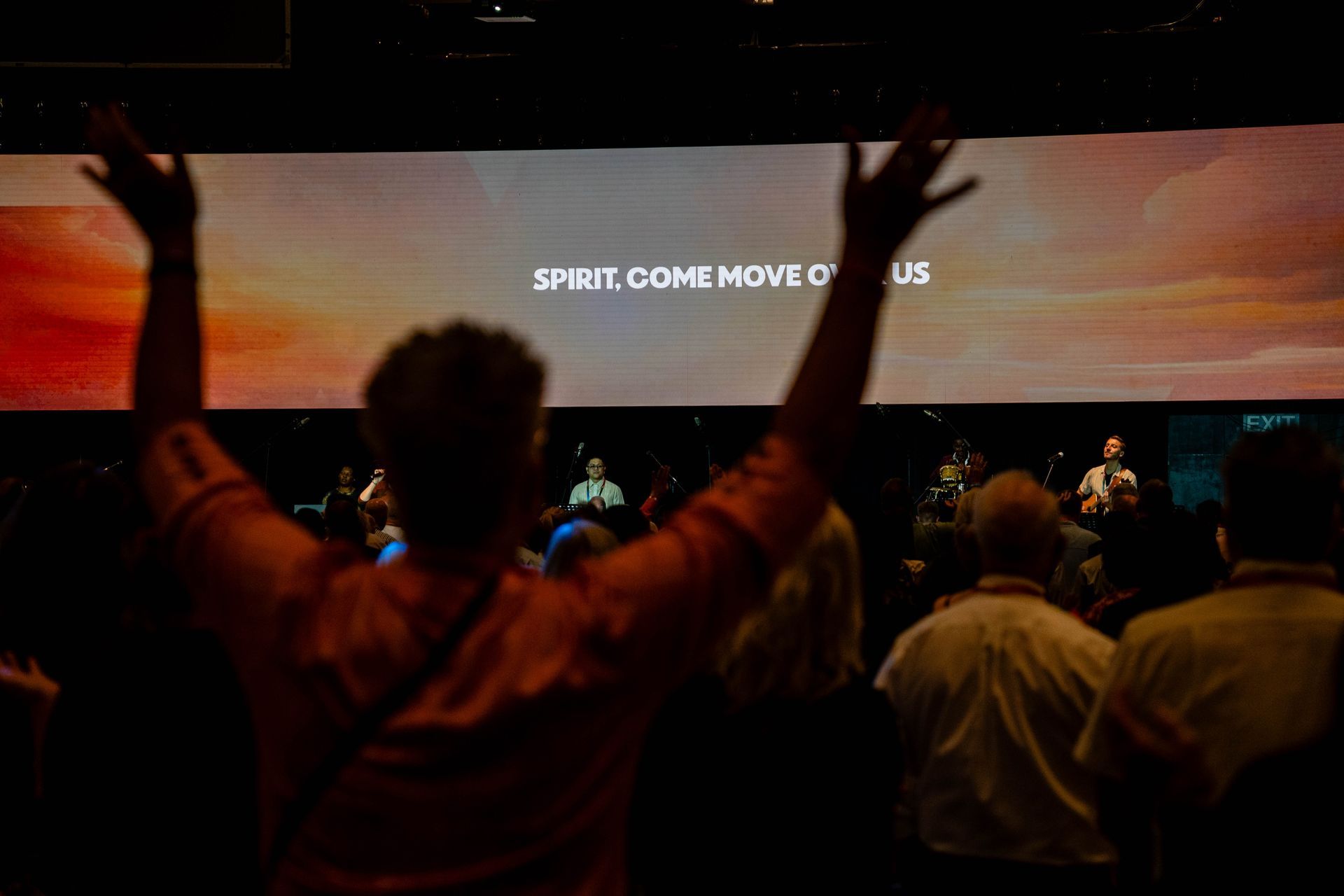
It was a day built for plenary business. Ahead of the Conference lay a full afternoon of legislation and, that evening, celebration of outgoing bishops and a rehearsal for the consecration of new bishops. But on Thursday morning, the people were asked to consider a single, quieter thing — the one thing, as Jesus once told a distracted Martha, that would not be taken away. Worship gathered the room first. Song rose in the ballroom until the words filled the space — “there is no one like our God” — and the languages of the global Church rose with it, prayers lifted in Spanish and in English by a people drawn from Chile, Guatemala, Brazil, the Dominican Republic, Panama and beyond. The prayer was not for ease but for fire: that the Holy Spirit would fall on the whole Global Methodist Church and send her out to speak of Christ to those who do not yet know him. Then the room grew still to hear the story of two sisters. Martha worked and worried over many details; Mary simply sat at the Lord's feet and listened. “There is only one thing worth being concerned about,” the reading recalled, “and Mary has discovered it.” To sit at the Lord's feet, attentive to his presence and his Word, is the better portion — and it would not be taken away from her. What Mary discovered as one disciple, Paul longed for in a whole congregation. From Luke the Scriptures turned to his words to the Corinthians — a call to receive the Spirit who is from God, and to carry the very mind of Christ. The preacher was the Rev. Luciano Pereira Da Silva, Conference Superintendent of Panama, whose ministry has knit the Global Methodist Church together across Latin America. He opened 1 Corinthians and set two churches side by side. One was the mature body God longs for — a people who, like Mary, had found the one thing and kept their eyes fixed there. The other was the church as it actually was in Corinth — gifted, Spirit-filled, and yet still infants in Christ, distracted like Martha by the wrong things: quarreling over which leader to follow, dressing the Gospel in the status-seeking habits of the surrounding culture.  The difference, Pereira insisted, was never about being filled with more knowledge. Maturity, instead, is the willingness to live by the cross — to be emptied of self for the sake of others. It is Mary's posture made corporate: a whole Church choosing the better portion together, sitting low before Christ rather than jockeying for its own importance. “The truly mature are those capable of disappearing,” Pereira said, “so that others can grow.” One plants, another waters, but God gives the growth; leaders come and go, while the Church of Jesus Christ goes on. Drawing on John Wesley's The Scripture Way of Salvation , he reminded the conference that grace does more than forgive us — it keeps working in us to make us holy. The power the Church is promised, he warned, was never given to dominate or to display our gifts, but to lay our lives at the foot of Jesus and the cross each day. As it had all week, the Conference shared Holy Communion by passing the elements hand to hand down each row, one believer serving the next — “the body of Christ, broken for you, because he loves you.” In the hush that followed, the room returned to the morning's one thing: “I'm not here for blessings; nothing else, nothing else will do — I just want you.” Only then were the people sent — into the legislation, into the day's decisions, into the evening ahead — under a plain and steadying word: if we have Jesus, we have need of nothing else. The work would come. But Thursday began by naming what comes first.
By Tyler Best September 3, 2026
Connectional Operations Officer Mike Schafer opened his report to the General Conference on Thursday afternoon with a number he insisted he needed artificial intelligence to reach: 707 days. That is how long it had been, he told delegates at the Sandton Convention Centre, since the Global Methodist Church closed its convening General Conference in San José, Costa Rica — 707 days he described as “craziness and chaos and excitement and watching what God is doing.” The transformation over that span, as Schafer's figures show, was striking. The church left Costa Rica with roughly 4,700 congregations; as of Thursday morning, he reported, it numbered 7,250. Its annual conferences had grown from 36 to 55, with six emerging areas that may soon become annual conferences of their own. The statistic he said he loved most: since Costa Rica, the number of annual conferences outside the United States has more than doubled. A Church that departed Central America as “a bunch of former United Methodists,” he said, had become the Global Methodist Church. Schafer credited the leaders elected two years ago who, in his telling, “had no clue what they were getting into” – an Assembly of Bishops now leading with passion for the Church's mission, a Connectional Council divided evenly between clergy and laity whose behind-the-scenes work he said he could speak about for his entire allotted time, and seven commissions and the Global Episcopacy Committee whose labor he called “amazing” to watch. The Connectional Council on Appeals, he noted, is now up and running and issued its first ruling during the week of the Conference. He offered particular thanks to Keith Boyette, present in the hall, who had poured into him during his first month on the job. On finances, Schafer said the Church that left Costa Rica in a good position now stands in “an amazing financial position,” and he credited the local churches and their generosity. He reminded the body that each local church is encouraged to give one percent to the global Church — funding the bishops, the commissions, the meetings of the Connectional Council, and the denominational staff. That giving, he said, had produced not merely a surplus over the past two years, but a large one. The surplus paid for the General Conference itself, including fully covered travel for every delegate from outside the United States. In addition, distributions were made to every annual conference for the new ministerial training fund, which conferences could pass along to those preparing for ministry or share with partner conferences. He also prepared delegates for a significant shift ahead. Until now, the Church has carried only a few full-time bishops, most serving part time on part-time salaries without benefits. Beginning in November, eight full-time bishops will receive full salaries and benefits — a change Schafer said would dramatically reshape next year's budget, and one he thanked the body for making possible with confidence. Noting that his full written report was available to read in the pre-conference workbook , Schafer instead used his remaining time to honor the people he works alongside. Living out the church's value of a lean structure, he said, a staff of just 19 — 13 full-time and six part-time — serves 7,250 congregations worldwide, handling finances, communications, information technology, endorsement ministries for chaplains and counselors, administration, and benefits. He called those present to stand and be recognized as “warriors.” Two colleagues drew special tribute. Tom Lambrecht, the General Conference Secretary and one of the pioneers of the movement, will retire at the close of this General Conference, remaining until the new “Book of Doctrines and Discipline” is published; Schafer called him “a jewel of a man” and announced a bronze sculpture of John Wesley would be sent after the conference. He also honored Rhonda Bourgeois, who has given the church some 50 hours a week of information technology work for years without pay – labor without which, he said, Costa Rica “would not have happened.” With the hiring of Jonathan Leung as the new director of IT, Schafer said, the hope is to “give Bourgeois her life back.” He closed on the 707 days behind and the promise of what might come in the next 707 and beyond, returning to the words of Jesus in Matthew 19:26: “for mortals it is impossible, but for God all things are possible.”
By Tyler Best September 2, 2026
“Push your chairs back a little.” It was not the instruction delegates might have expected to open the fourth morning of the 2026 General Conference, but the Rev. David Sablan Jr. had opened his Bible to Psalm 150, and he intended the whole psalm — praise with the tambourine and dancing, praise with a clash of cymbals, everything that has breath giving praise to the Lord. What followed at the Sandton Convention Centre carried the unmistakable warmth of a Filipino revival meeting: laughter, an invitation to greet a neighbor, and a room of bishops and delegates on their feet, coaxed into offering God the best of their energy before the preaching had properly begun. Sablan brought that exuberance from the Mega Manila Annual Conference, where he serves as Conference Evangelist and Chairman of the Board of Ministry. He was among the pastors who helped plant the conference, which has multiplied from a small band of congregations to more than fifty and now reaches Filipino believers scattered across the Middle East and Europe. An evangelist and revivalist who has spent decades calling people to Christ, he makes his home with his wife, Jomel, in the province of Cavite — a country, he noted with a grin, of “7,100 islands during low tide, and 7,000 during high tide.” He confessed to knowing the “proverb” that blessed are the pastors who keep their sermons short, “for they shall be invited again,” before adding the caveat that governs an evangelist’s clock: “when the Holy Spirit moves, the clock stops.” His text was 1 Peter 1:15–16: “As he who called you is holy, be holy yourselves in all your conduct…’you shall be holy, for I am holy.’” Before drawing out what such a life looks like, Sablan named what he sees pressing against it. Secularism and liberalism, he warned, have seeped so far into the culture — and into the churches — that the world now shapes the Church at least as much as the Church shapes the world. The recovery he called for was not a strategy but a return to the authority of Scripture and the restoration of “biblical integrity.” For holiness, in his telling, is always mediated through and grounded in the Word of God. He even pressed the command into his own Tagalog, teaching the room to say it back to him: maging banal ka — be holy. From there, the sermon unfolded in three movements — a life shaped by Scripture, sourced in the Spirit, and reflecting God’s own character. Holiness, Sablan insisted, is never manufactured. “He will generate what you cannot create,” he said of the Spirit, naming the fruit that no program can produce. He was blunt about the counterfeit: churches with many activities and little adoration, much machinery and scant power. “God wants to be seen,” he pressed. “But the question is, do we want to see God?” Holiness, he preached, is nothing less than “radiant beauty — the splendor of God reflected in his people.” He returned again and again to a single question, inviting delegates to ask it of themselves and their ministries: when others marvel at your transformation or your success, what is your answer? “Jesus is my because ,” he declared. “Who is your because ?” That question turned, near the end, toward the very work the delegates had traveled to Johannesburg to do. Borrowing the image from “Holy, holy, holy” of the saints casting their crowns before the throne, Sablan named the milestones of a historic gathering — the petitions the conference would affirm, the decisions it would discern, and, choosing his words with care, “the calling of our bishops.” “I didn’t say the election of bishops,” he pointed out, nudging the room toward reverence rather than mere procedure. None of it, he charged, may be clutched as a human accomplishment: “All this must not be held as our own. They belong to God.” Even the denomination’s remarkable growth — more than seven thousand congregations across more than fifty annual conferences — he laid at the same throne, crediting not the Church’s labor but the Spirit who multiplies disciples across the earth. From worship, the delegates would rise to petitions and plenary, to the ordinary and consequential labor of a General Conference. But the morning had already fixed the terms. The people called Global Methodist exist, Sablan reminded them, for one mission — to make disciples of Jesus Christ and to spread the beauty of scriptural holiness across the globe — and that mission rests on a personal foundation the Church cannot delegate. As John Wesley had put it, and Sablan made his own: “Without being holy myself, I cannot promote real holiness in others.” Be holy in all you do, the charge had come — because the One who calls is holy.
By Tyler Best September 2, 2026
For the first time, the Church has elected a regular, full-time Assembly of Bishops to serve six-year terms. Under the theme "The Beauty of Holiness," the Global Methodist Church reconvened for the Wednesday afternoon plenary of the 2026 General Conference in Johannesburg, South Africa. Delegates turned to one of the weightiest tasks entrusted to a gathered Church: electing those who would serve as its bishops. What began in worship and prayer moved, in the fullness of the deliberative work, to the sacred act of discernment by which the body chose the general superintendents who will lead the denomination into its next season. Following the two-year interim episcopacy established at the 2024 Convening General Conference in San José, Costa Rica, the delegates in Johannesburg elected eight bishops to lead the denomination through the 2026–2032 sexennial. Those elected will be consecrated at General Conference in the historic manner, with their terms of service beginning November 5, 2026. The election followed the process set forth in ¶604 of the "Book of Doctrines and Discipline." In the months before the conference, a plenary body composed of area committee representatives from each of the denomination's duly organized annual conferences gathered to define eight episcopal areas, each drawing together six to eight annual conferences from different parts of the world. As the Global Episcopacy Committee has emphasized, bishops in the Global Methodist Church do not hold jurisdiction over a single region; they serve as general superintendents of the whole Church, and the episcopal areas reflect the global character of the connection, with no area drawing more than four conferences from the same continent. Each area committee on episcopacy interviewed and evaluated the episcopal nominees and produced a ranked list of its top candidates, shared with the delegates ahead of the conference to guide their prayerful discernment. In Johannesburg, the full body of the General Conference elected one bishop to each defined episcopal area, with at least sixty percent support required to elect. Delegates could not cast a vote for the same candidate for more than one episcopal area on a single ballot. Ballot by ballot, delegates waited with bated breath as each episcopal area was taken up in turn, the balloting proceeding methodically through all eight areas before the outcomes were announced together at the close of each set. A total of five ballots were necessary to elect the full slate of eight bishops. The delegates elected the following bishops to serve the eight episcopal areas of the Global Methodist Church for the 2026–2032 sexennial.
By Tyler Best September 2, 2026
“In the United States, we would call this day Hump Day,” Norma Morrison told the delegates as she presented Wednesday’s agenda — the midpoint of the 2026 General Conference, and the moment the gathering turned in earnest from the work of its legislative committees to the work of the whole body. The days of committee deliberation now behind them, delegates spent Wednesday’s plenary at the Sandton Convention Centre acting on that work petition by petition, before Bishop Jeff Greenway and the presiding team would hand the afternoon over to the long-anticipated election of the denomination’s bishops. Greenway, presiding alongside Bishop Carolyn Moore, opened with a word of explanation that set the tone for the day’s deeper business. He, alongside Bishops Scott Jones and Kenneth Levingston, was carrying the chair, he noted, precisely because they were not among those standing in the coming election; colleagues who were would not preside until their own elections were decided. “So you’re stuck with us,” he said, “until we get this done.” Much of the morning moved through consent agendas — the efficient machinery by which each legislative committee brings forward petitions it recommends for adoption and, separately, those it recommends for rejection, so that the body can affirm a committee’s work in a single vote unless a delegate asks to lift an item out for debate. Six committees reported in turn: Judicial Administration, chaired by Jimmy Towson; Constitution, Connectional Organization and Finance, chaired by Clark Atkins; Doctrine and Sacraments, chaired by Matt O’Reilly; Local Church, chaired by Brandon Nichols; Ministry, chaired by Thadeus Sales; and Conferences, chaired by Beth Ann Cook. The Connectional Organization and Finance Committee alone handled roughly a quarter of all petitions before the conference, with the Local Church Committee following, having worked through 122 petitions. Delegates repeatedly navigated the process’s one counterintuitive turn — that to sustain a committee’s recommendation not to approve a petition, one votes yes. One of the morning’s clearest notes of joy came with a suspension of the rules to consider a covenant of understanding between the Global Methodist Church and the Korean Methodist Church. Bishop Moore, framing the work of the Ecumenical Relationships Commission, described such covenants as rare opportunities to recognize a particular affinity within the wider body of Christ, and announced that an envoy of eight Korean bishops would arrive the next day for a signing ceremony. Speaking in favor, the Rev. Leo Park of the Northeast Conference, born and raised in South Korea, tied the moment to the conference theme: “The beauty of holiness includes the beauty of unity.” The body affirmed the covenant unanimously. As the noon hour approached, Chris Ritter, chair of the Global Episcopacy Committee, walked the delegates through the discernment that had brought them to the brink of electing eight bishops to the denomination’s first full six-year terms. Reaching back to Acts 6 — “select from among yourselves seven men of good standing, full of the Spirit and of wisdom” — he described a grassroots process in which representatives of every annual conference had shaped eight international Episcopal areas, and area committees had produced ordered lists of nominees after “hundreds of hours of prayer, study, interviews, conversation, and discernment.” He asked them to hold the coming hour as worship rather than contest. By then the room had grown quiet. Delegates who had spent the morning sustaining and rejecting petitions one vote at a time understood that the next votes would be of a different order — not amending church law but now naming shepherds. Half the work of General Conference now lay behind them, with the eight ballots and the calling of the Church's bishops waiting on the other side of the hour.
By Tyler Best September 2, 2026
The business of the day had ended, but the Sandton Convention Centre was only beginning to come alive. As the sun set over Johannesburg on Wednesday, the hall that had held hours of General Conference deliberation, elections, and legislation was transformed for a Celebration of Africa — an evening set apart for delegates and attendees to lay down their agendas and take up celebration. As a church gathered on the African continent for the first time in its history, it was a night many had been waiting for. The evening came in music, in food, in fabric, and in the unhurried delight of God's people from every corner of the globe enjoying one another's company. It began, as the best gatherings often do, with the music. The floor shook under indlamu, then the street-born snap of Pantsula and the slap-and-stomp of gumboot dancers; the Wits cultural dancers took their turn, followed by the women of Abafazi Bonyawo, the music of Inciyo, a brass band that filled the hall wall to wall, and Shenge to carry the night on. No translation was needed; the joy of it carried on its own. The aromas told their own story. Buffet tables offered a spread of African cuisine — pap and chakalaka, jolof rice, Shisa nyama style boerewors, Giriyama fish curry, Xhosa style samp and beans, and malva pudding for those with a sweet tooth. For many international delegates, it was a first taste of the flavors that shape daily life across the host continent; for others, it was the comfort of home carried into a global gathering. Perhaps nothing captured the spirit of the night more than the garb. Delegates arrived in an array of traditional dress, including patterned West African kente and ankara, Zulu umqhele, Xhosa beadwork, and more, turning the hall into a moving tapestry of the church's global family. Attendees from outside Africa were welcomed to join in, given the opportunity to purchase pieces created by local artisans as part of the evening. A Celebration of Africa was, on its surface, a party. But those who planned it understood it as something more. The Global Methodist Church describes its mission as making disciples of Jesus Christ and spreading scriptural holiness across the globe — and evenings like this one are where global stops being an adjective and becomes a lived reality. Relationships formed over shared food and song do not end when the music stops; they become the connective tissue of a movement still learning the shape of its life together.  As the last songs gave way to embraces and quiet conversation, delegates carried something back to their hotels that no petition could legislate: a deeper affection for one another, and a fuller picture of the beauty on display across the whole household of God.
By Amanda Kuhn September 2, 2026
Starters Roast glazed beetroot salad ⅼ cinnamon - nutmeg spice ⅼ burnt goat cheese crumble Three beans salad ⅼ curry spices ⅼ cucumber spaghetti ⅼ fresh coriander African style Harissa laced baby potato salad ⅼ chilli mayo ⅼ rocket leaves Vegetable tabbouleh, with Fattoush salad Date salad, orange supreme, red onion, chives Green garden salad ⅼ roasted brinjal, zucchini, carrot & butternut ⅼ Avocado and mustard aioli Peri peri chicken livers ⅼ Mozambique flavours & vegetable ribbons in garlic-thyme marinade Included: Enjoy a self-served cold table spread of: assorted lettuce, tomato variation, olives, cucumber, mushroom and assortment of dressings, condiments & a Bread display Main Course Traditional cooked beef tripe ⅼ with spicy dumpling Braised beef short rib ⅼ glazed carrots, butterbeans & pearl onions Shisa nyama style boerewors with chakalaka Tagine of chicken legs and thighs Kenyan Fish curry”Giriyama” Xhosa style samp & beans Jolof Rice Pap cakes with chakalaka ⅼ gratined with cheddar Vegetable mac n’ cheese, spinach & ricotta ravioli, coconut, okra, Cheddar Vegetable duet ⅼ roast pumpkin & creamed spinach ⅼ toasted pumpkin seeds in balsamic Dessert Malva pudding & custard Delectable Mini trifles Mini carrot cakes Fresh seasonal fruit salad & cream Crouquenbouche (Tower of profiteroles) Chocolate mousse Passion fruit brulee
By Tyler Best September 1, 2026
The Doctrine and Sacraments Legislative Committee gathered this week for what Chair Matthew O’Reilly described as one of the most important tasks the group would undertake— “to start working on a doctrinal standard for the Church.” The committee began the slow, careful work of considering a proposed, combined Articles of Faith for the Global Methodist Church. That the Church would take up this question in Johannesburg is itself part of the story. Meeting on the African continent for the first time, the 2026 General Conference has gathered under the theme “The Beauty of Holiness,” and few items on its agenda reach as deeply into the identity of the denomination as its foundational statement of belief. Paragraph 106 of the “Book of Doctrines and Discipline" arrived with seven pieces of legislation and four resolutions attached. Early in the session, the committee voted to use Petition 1441, the report of the Discipleship, Doctrine, and Just Ministry Commission, as its base text for consideration as delegate Greg Stover put it, the body would have “one base from which to work on the articles.” To explain that base, the committee turned to the Commission's chair, Dr. David Watson, clergy of the Allegheny West Annual Conference. The charge, he recalled, had come from the 2024 Convening General Conference with striking simplicity: the commission was told to “combine the articles and the confession” – merging the historic Methodist Articles of Religion with the Evangelical United Brethren Confession of Faith – “and that was really it.” From that simple mandate the commission assembled a writing team of clergy and laity, men and women with international representation, and divided the work article by article. Throughout, Watson returned to a single conviction: the statement did not belong to its authors. “There are articles in here that I would state differently,” he told the committee. “But it's not David Watson's document. It's the Church's document.” The aim, he explained, was to produce something “expressive of Wesleyan and orthodox theology” that could be “adopted by the whole Church” – nothing novel, nothing inventive. “We weren't constructing doctrine on our own,” he said. “We were retrieving doctrine for the Church.” That posture of retrieval did not mean the commission avoided the questions of the present moment. Combining the two source documents surfaced redundant material, which the team removed. But it also revealed gaps the writers felt they could not, in Watson's words, be “irresponsible and negligent” enough to leave unaddressed. Among those areas was theological anthropology — broadly, the Christian understanding of what it means to be human. Watson referenced the view that theological anthropology has become a significant area of doctrinal debate in the present age, comparing its contemporary importance to debates surrounding Christology and the Trinity in the fourth and fifth centuries. “We added a short piece on theological anthropology,” he said, “because that really is the most acute issue of our day.” He was equally candid about the scrutiny the draft had endured. The Articles passed through the Assembly of Bishops, a review team of roughly fifty readers who commented on every article, and Wesleyan theologians from outside the Global Methodist Church, before the Church's communications team carried the draft out through its official channels, opening it for comment to anyone who wished to weigh in. The Commission worked through the feedback line by line – not adopting every suggestion, since some contradicted others, but, Watson insisted, taking each seriously. For instance, when early readers worried that language calling human beings “fundamentally good” might be misheard as Pelagian, the Commission revised it. By the time the text had reached the committee floor, it stood at what Watson described as the fourth stage of its vetting. Watson closed his overview by presenting the proposed articles as “a labor of love for the church.” And its fate, he was quick to add, rests where it belongs with the delegates at General Conference. “I do pray that the Church will adopt these articles," he said, “but if they don't, that's the will of the Church, because it's about the will of the body.” The discussion that followed made plain how much care remains. Delegates wrestled with the ordering of the articles, the language describing Holy Scripture, use of the word “inerrancy,” how the article on the Holy Spirit should render the Creed's teaching on the Spirit's procession, and more. Discussion and consideration of amendments were continuing through the committee’s Tuesday meetings, which had not concluded at the time of publication. Following the committee process, the petition containing the proposed Articles of Faith is expected to come before the plenary later this week. In the meantime, delegates continued the careful work of considering language intended to express the Church’s received faith for a global denomination. For a General Conference gathered under the theme ‘The Beauty of Holiness,’ the committee’s deliberations reflected both the weight of the task before it and the prayerful posture with which delegates approached it.
By Tyler Best September 1, 2026
Delegates gathered for worship on Tuesday morning at the Sandton Convention Centre for a start to the third day of the 2026 General Conference. A call to worship rose in English and Russian, Scripture was read in Slovak, and “Holy, Holy, Holy” filled the room in a chorus of languages — the beauty of holiness already on display in the gathered people of the church before a word of the sermon was spoken. Into this sweet spirit came the morning's preacher, the Rev. Diane Ury, who serves alongside her husband, Bill, as National Ambassador for Holiness in the Salvation Army. With seminary education at Asbury Theological Seminary and a Master of Arts in Theology from Wesley Biblical Seminary, she is a self-described theology nerd. In addition to serving with the Salvation Army, Ury has been affiliated with other Wesleyan strands, and when life allows, worships at Asbury Global Methodist Church in Raleigh, North Carolina. She spoke with a distinctively Wesleyan accent to a theme woven through the entire conference: that holiness begins not with rules and standards but with the character of God himself. Preaching from Isaiah 6, Ury framed the prophet's vision as a picture of what happens when the beauty of the Holy One grasps hold of a person. Isaiah's cry, “Woe is me, for I am a man of unclean lips,” was not despair, she suggested, but the gift of conviction: God graciously revealing to Isaiah who He truly was so that he might be cleansed and sent. “Conviction,” she said, “is the beauty of our holy God coming for us.” Conviction, Ury argued, is not condemnation but one of God's most gracious and intimate movements toward the human heart, because he longs for wholeness. Drawing on John Wesley, she pressed past sin that no longer reigns to sin that no longer remains — the Wesleyan hope that “inbred sin” can be cleansed and the heart filled with perfect love. A holy life, in her telling, is a desperate life, one lived continuously face to face with Jesus, feeding on His Word, and clinging to the means of grace. Ury did not exempt herself, or the room, from the warning. Idolatry, she reminded delegates, can attach itself to good things — education, even a denomination — and holiness can curdle into pride. “I know people who have PhDs in holiness,” she said, “and they are mean.” Her own story followed: top of her seminary class, yet self-righteous, judgmental, and unkind in the very name of the doctrine she taught, until the God of holy love convicted and cleansed her. She named it the most profound experience of being loved that she had ever known. Ury tied the vision home to the mission of the moment. The seraph's burning coal that touched Isaiah's mouth, she said, prefigures salvation in Jesus Christ, who does not rescue from a distance but takes hold of corrupted human nature and pours himself into it. This good news of recreation, she told the conference, is the message God has raised up the Global Methodist Church to proclaim across the world. The worship moved from the pulpit to the table, as it had throughout the conference, delegates receiving Holy Communion by intinction and serving one another. Ury's closing words lingered over the elements as the room came forward: “Beauty has come for you.” The holy life, she said, is continuous, desperate, face to face — beholding, breathing, and becoming.