"Here I Am, Send Me": A Final Morning of Worship in Johannesburg

Tyler Best • September 5, 2026

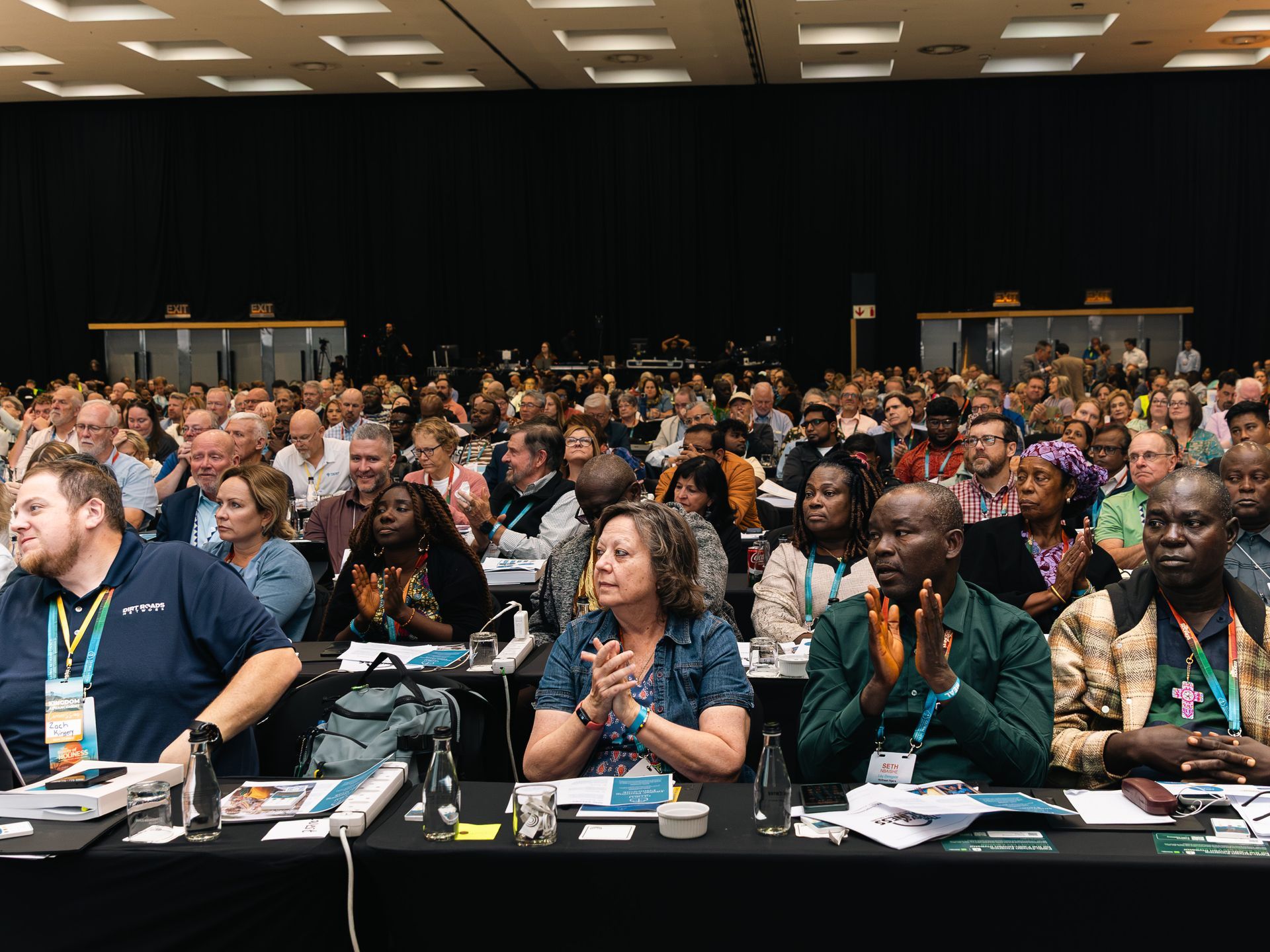
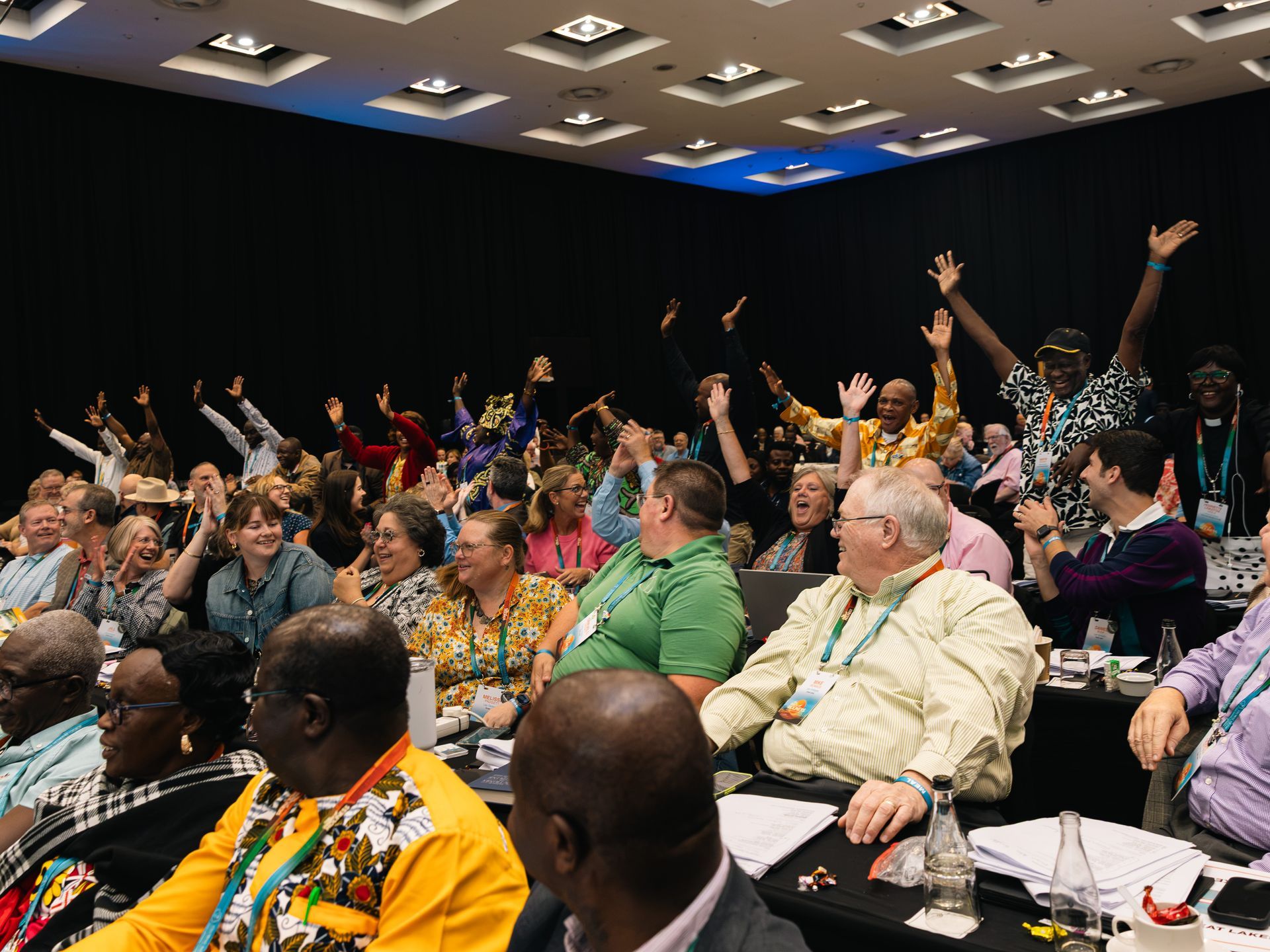
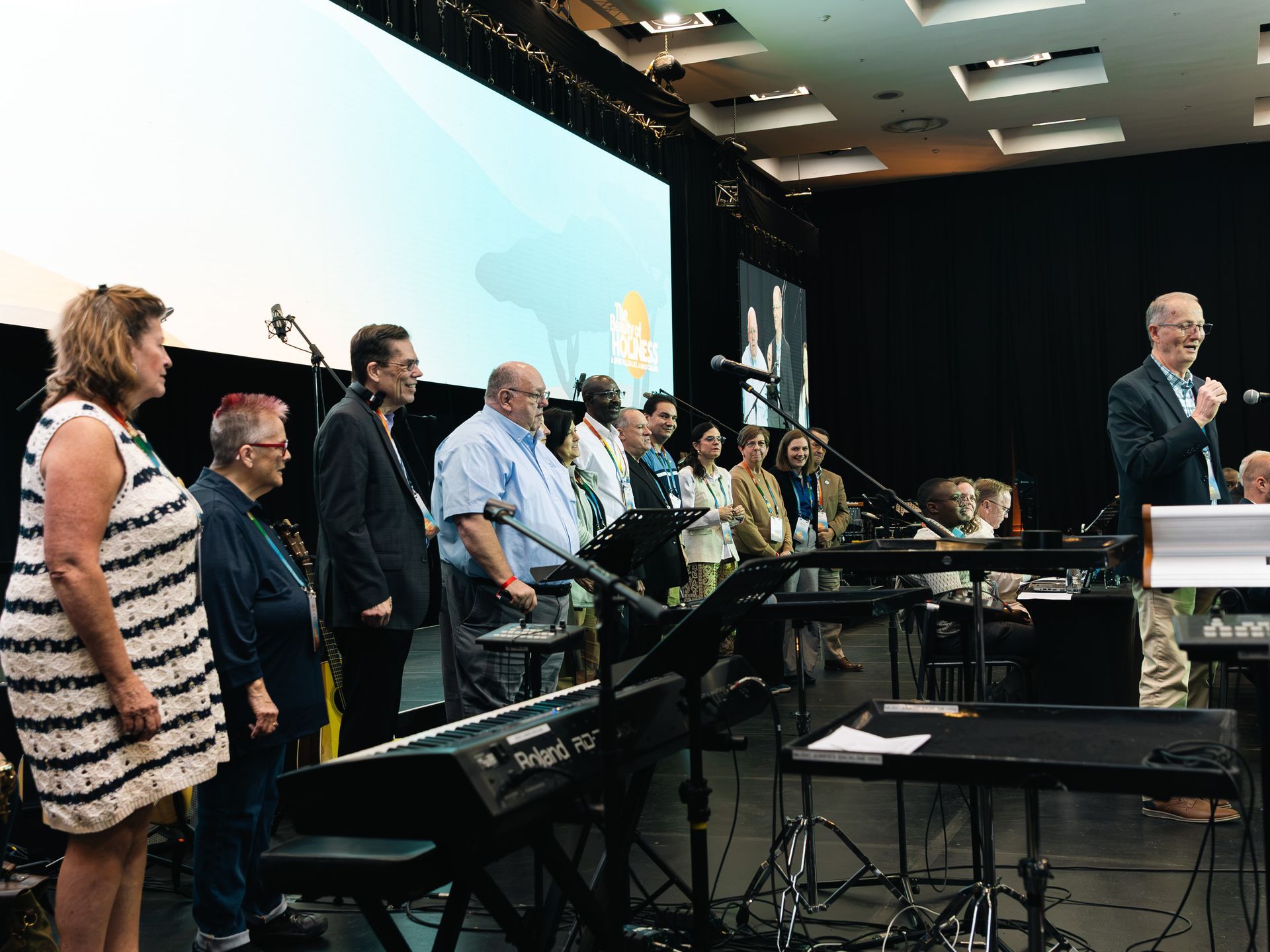
Final morning worship at the 2026 General Conference of the Global Methodist Church began with praise carrying the accent of the whole Church. "There is no one like Jesus," the room sang, one language folding into another until the refrain rose in the cadence of African worship and the delegates were on their feet.


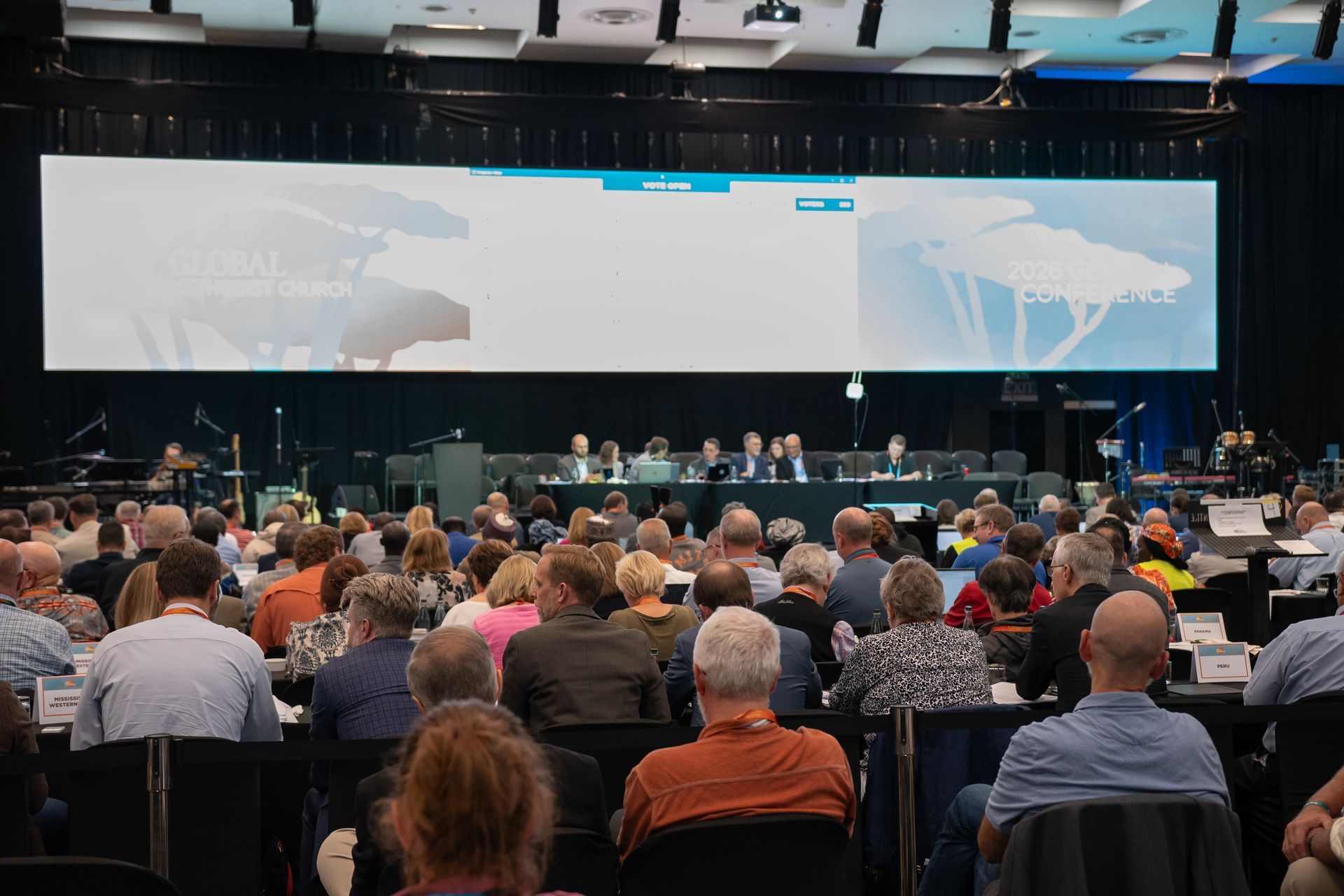
It was a fitting picture of the theme framing these days together, the beauty of holiness. After a recap video carried the delegates back through the week's worship and deliberation, the service settled into Scripture and prayer — and here, too, the global character of the Church was unmistakable. 


A delegate read the Great Commission from Matthew, the risen Christ sending His disciples to “make disciples of all nations,” then prayed twice, once in English and once in Xhosa, asking that those gathered be made ambassadors of peace. Members rose again for a song of praise in Luganda, brought from Uganda, confessing a caring Lord who sustains his people. The second lesson, Colossians 3, was read first in the King James Version and then in French — the same summons, in two tongues, to set the mind on things above and put off the old self for the new.


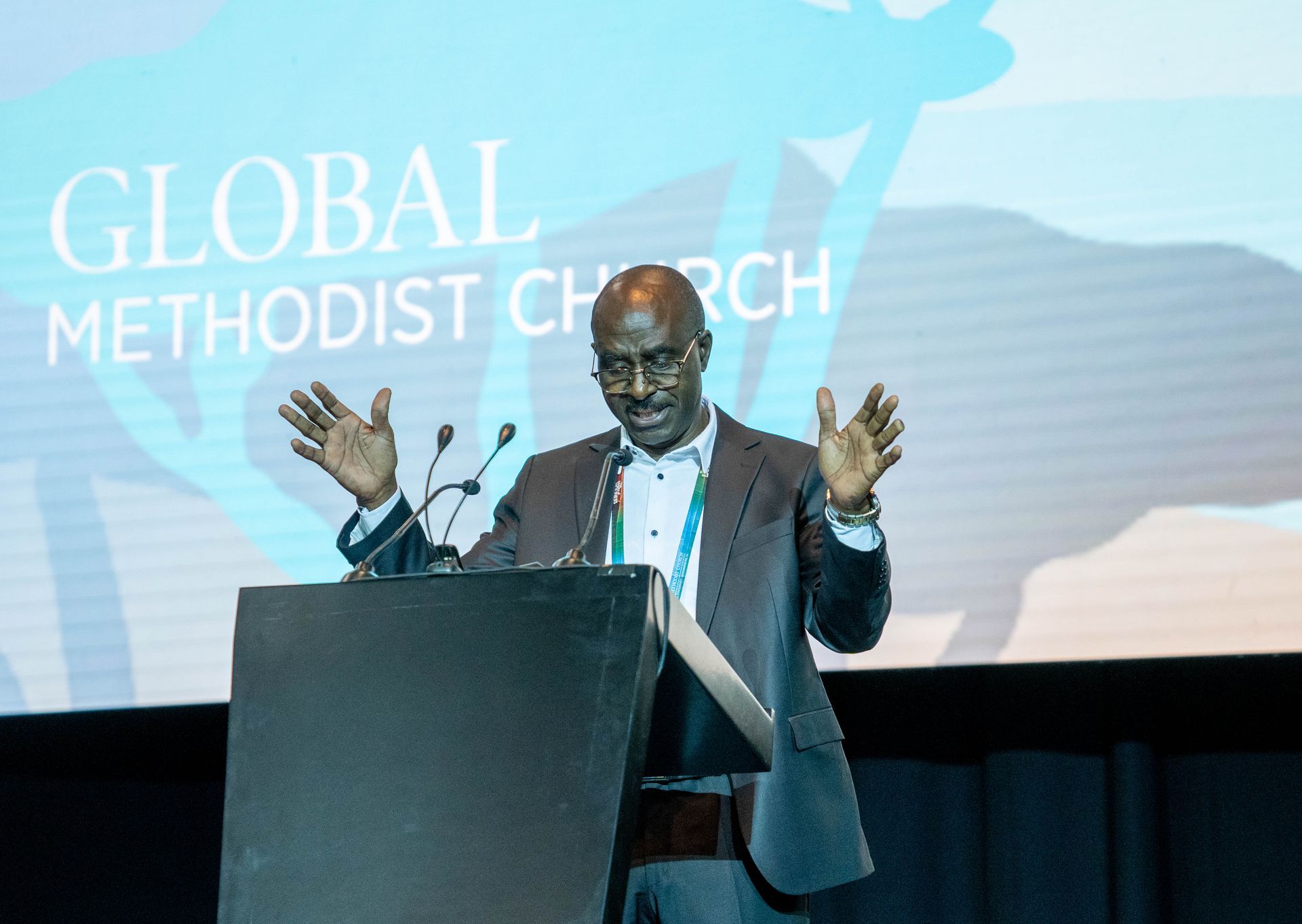
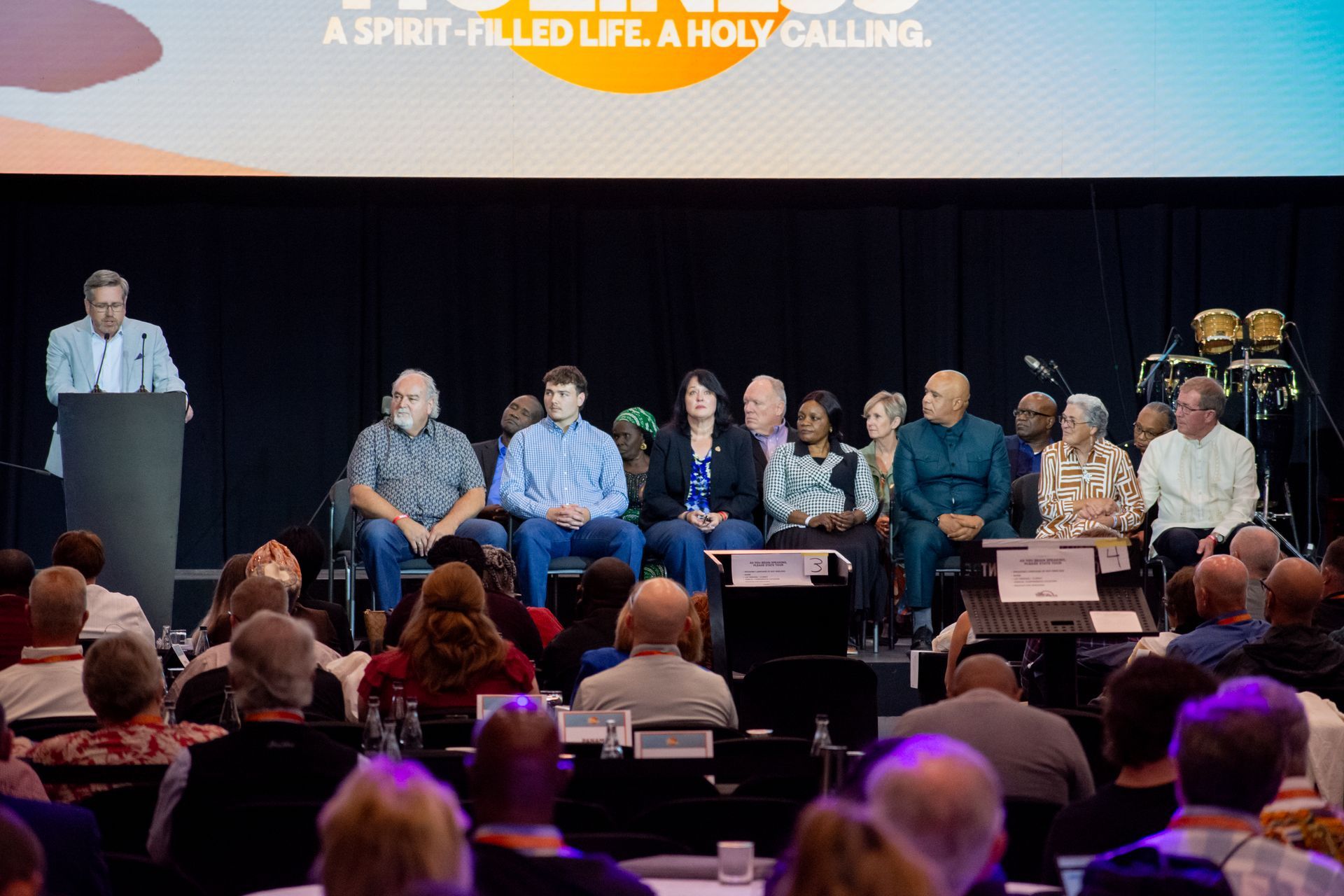
The preacher for the hour was Simon Mafunda, director of GMC Africa, who has helped plan and organize the Global Methodist Church's annual conferences across the continent. A layperson in the Zimbabwe Annual Conference and a General Conference delegate multiple times over, Mafunda has served as a lay leader for fourteen years and will soon begin studies at Asbury Theological Seminary as he prepares for ordination as a deacon. He and his wife, Hannah, have been married thirty-five years and share a passion for ministry among marginalized children.


Mafunda took as his theme a phrase that sounds, at first, like a contradiction: “We die to live.” To truly live, he said, a person must first die — not to self-improvement, but to self-surrender. He anchored the claim in Paul's confession, “I have been crucified with Christ, and I no longer live, but Christ lives in me,” and drew out its cost with plain honesty. What dies is pride, selfish ambition, and the desire to have one's own way. “This is not merely changing our behavior,” he told the body. “It is a change of ownership. Before Christ, I belong to myself. After Christ, I belong to him.”


Yet Christ does not leave his people empty, he was quick to add; the cross is always followed by resurrection, and the old self is exchanged for a new heart and a new purpose. 


That new life was never meant to be kept safe on a shelf. “Jesus did not save us merely to keep us safe,” Mafunda said. “He saved us to send us.” To a conference preparing to scatter back across the world, he pressed the point home: “The Christian life is not a waiting room for heaven. It is a mission field.”


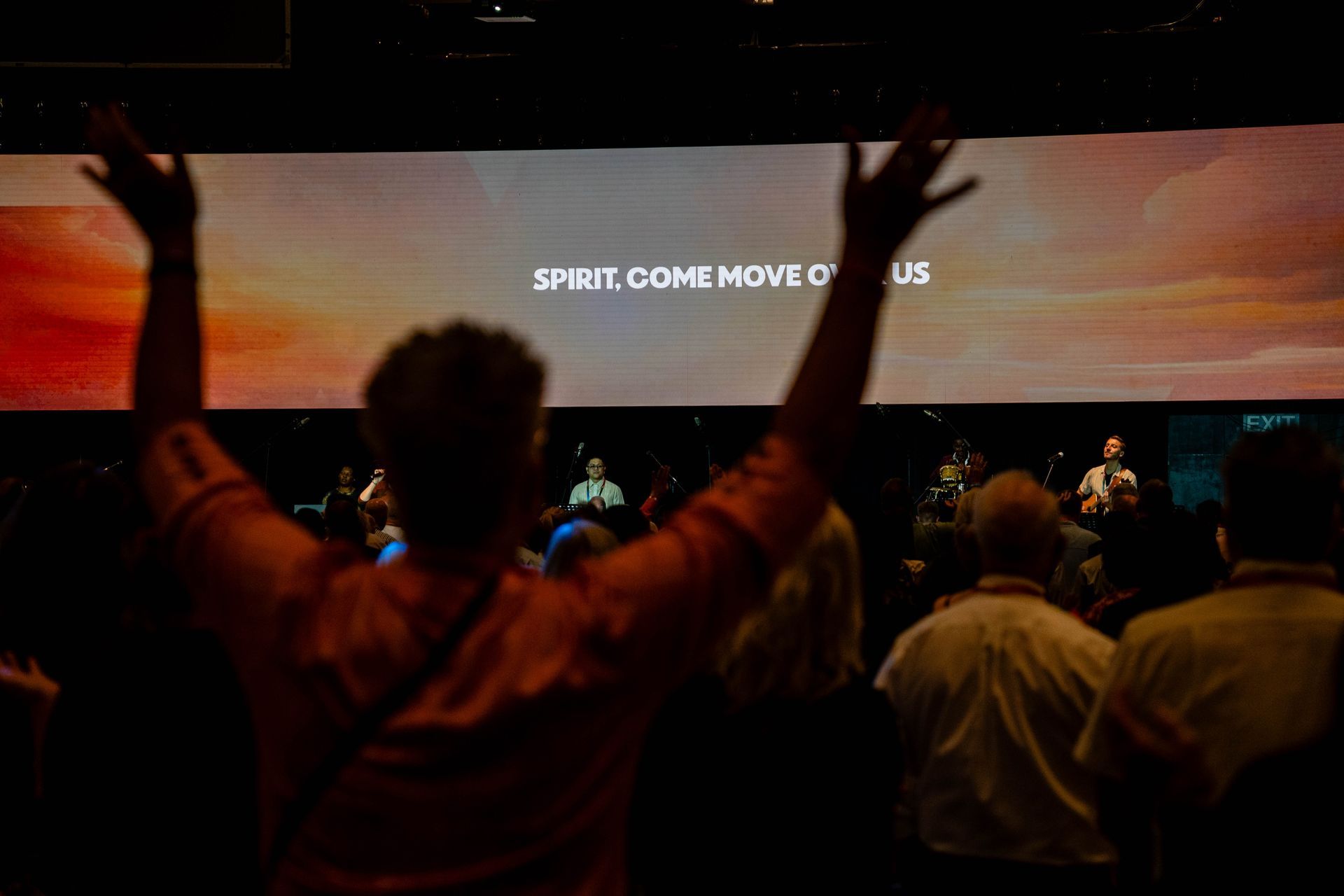
As the message closed, Mafunda turned Isaiah's vision into an invitation. God is still asking “Whom shall I send?” he said, into unfamiliar languages, into persecuted and war-torn places, into neighborhoods and workplaces where indifference reigns. This call is not for the qualified but for the surrendered. Bishop Jeff Greenway offered the closing prayer, inviting all present to give as much of themselves as they knew to as much of Jesus as they could understand, trusting God to make up the difference.


Related Posts

September 5, 2026
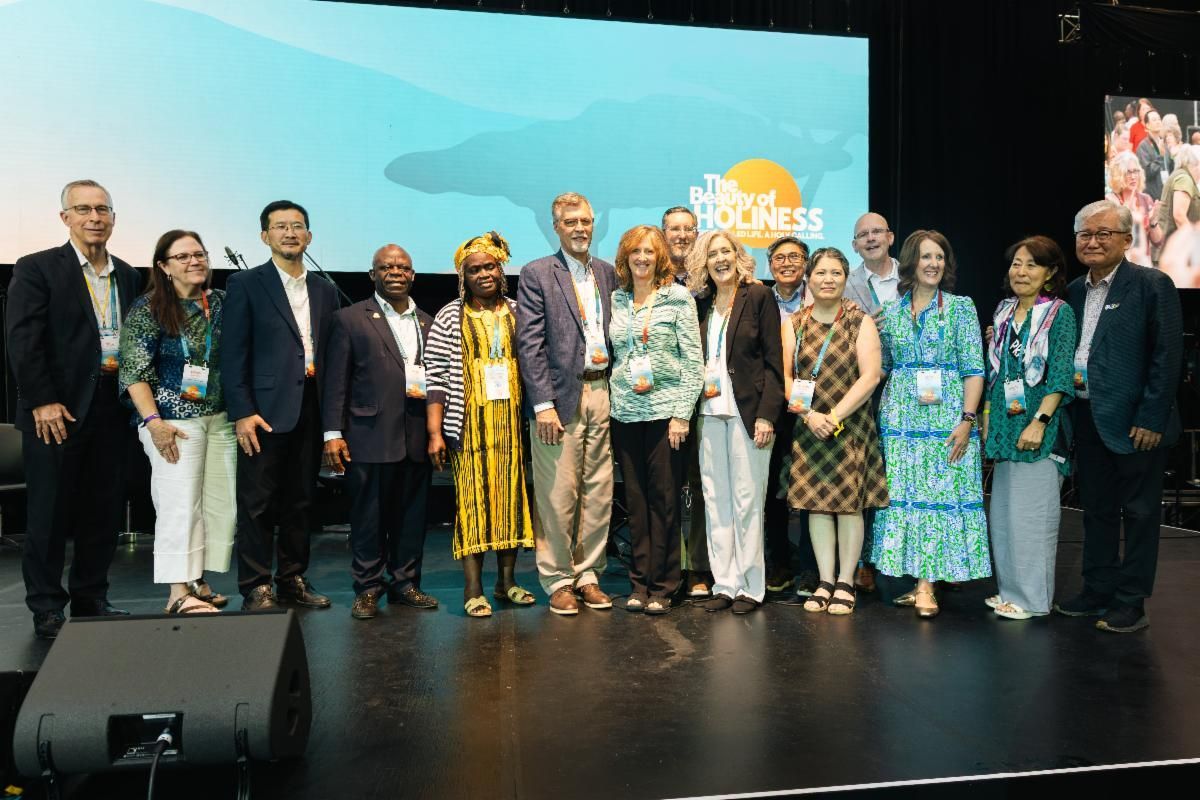
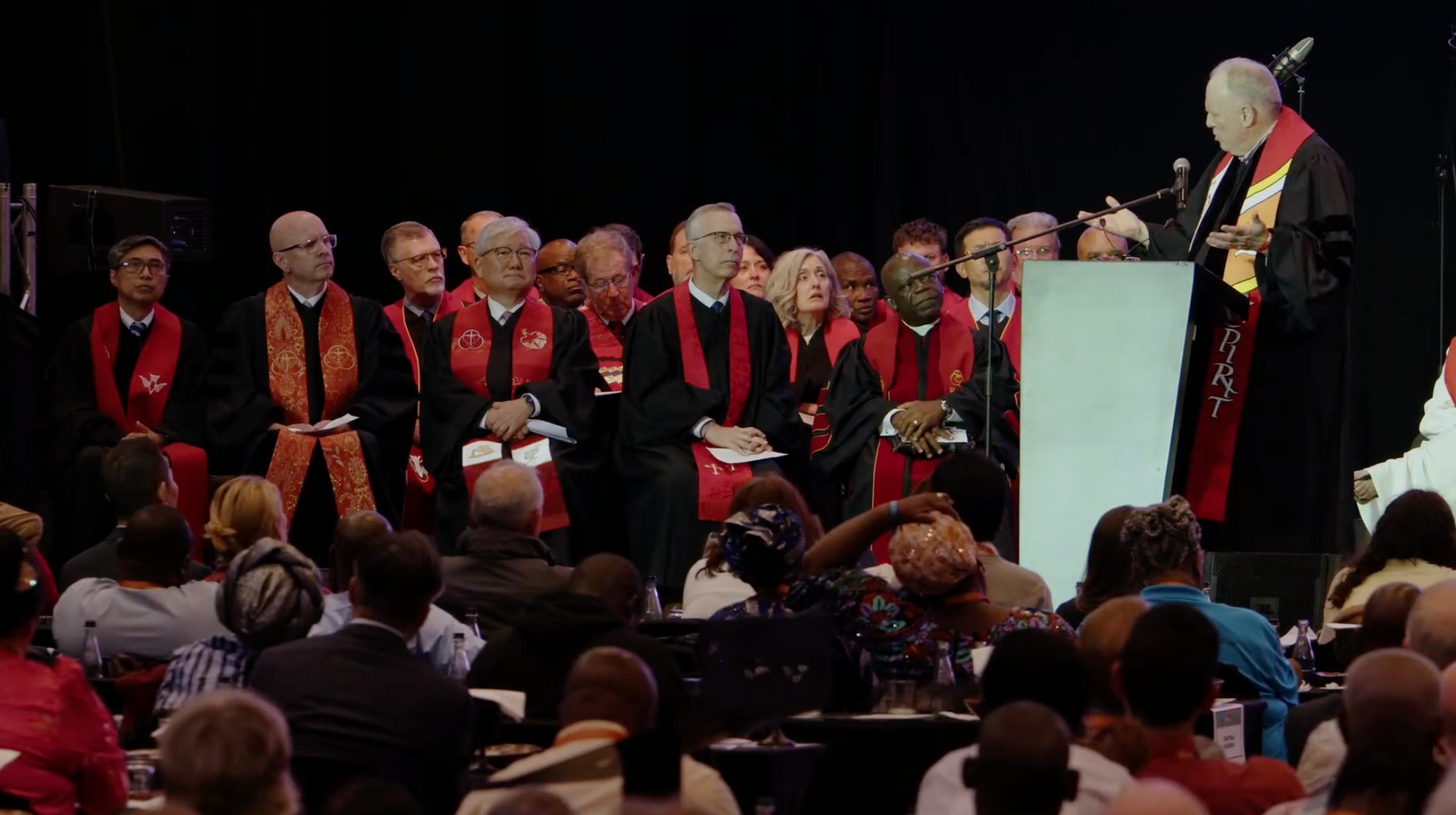
Clergy from across the connection gathered at the Sandton Convention Centre in Johannesburg in their robes and red stoles, and the delegates who had spent the week bent to the sacred work of legislation and discernment turned to a moment of consecration for the Church's new bishops. As directed by the “Book of Doctrines and Discipline,” eight bishops were chosen to lead the connection through the 2026–2032 sexennial. Of the eight elected, five will be consecrated for the episcopacy, as the remaining have served previously in the role. Each will be set apart in the historic manner, taking up a ministry described not as an office to be held but as a sacred trust — to shepherd the Church, guard the faith, teach sound doctrine, equip the saints, and lead the people of God in the mission to make disciples of Jesus Christ and spread scriptural holiness across the globe. The five reflect the breadth of a truly global Church: Luther Oconer, Jonathan Lee, Lyndol Loyd, Jerry Kulah, and Paul Lawler. Their episcopal areas gather annual conferences from across continents, and as general superintendents they serve across nations, languages, and cultures. All of the bishops’ new terms of service begin November 1, 2026. The service was also a moment of gratitude. Before the new bishops were consecrated, the conference gave thanks for those who have provided episcopal leadership through the Church's formative years and who are not continuing in the role, honoring their faithful and selfless service to a young denomination. It was one of those leaders, Bishop Jeff Greenway, who brought the Word — and with it, a charge to those about to be set apart. Today, and all the rest of your days,” he said, “are not days for pride or self aggrandizement, but rather days to humbly die to yourself, so that the life of Christ may continue to be formed in you.You are still the same person you were the day before you were elected. May God give you the grace to humbly live into your new role and responsibility. Over the gathering hung the words of the Wesley Covenant Prayer, offered as the posture of every leader being set apart: “Put me to what You will, rank me with whom You will... I freely and heartily yield all things to Your pleasure and disposal.” It is the heart of episcopal leadership — not Where do I want to serve? but Where is Christ calling me to go? The Church is invited to pray for these bishops, their families, and the people and places they have been called to serve — that they might lead with humility, teach with faithfulness, and shepherd with love. In this, the beauty of holiness is not merely a theme but a calling, taken up anew. 
By Tyler Best September 5, 2026
“Amazing grace, how sweet the sound,” the delegates sang beneath the hall of the Sandton Convention Centre, and only when the last verse faded did Bishop Jeff Greenway call the body to order. What followed would prove to be among the most consequential mornings not only of this General Conference, but of the Global Methodist Church's young life–the adoption of the Articles of Faith. Its centerpiece was a labor more than two decades in the making. Introducing Petition 1441, the Rev. Dr. Matt O'Reilly reminded the conference that when Methodism's predecessor bodies merged in 1968, they set the Articles of Religion and the Confession of Faith side by side without reconciling them — “a crack,” as he described it, in the church's doctrinal foundation. The petition before the delegates completed the work left undone: a single successor document, the Articles of Faith. O'Reilly was careful to name that it belonged to no one author, inviting a writing team, review teams, an online survey, a commission, and a legislative committee to stand in turn. “This is why the Articles of Faith belong to the Church.” A single amendment, offered by the Bishop-elect Paul Lawler, strengthened the article on Holy Scripture, declaring it “true in all it affirms, entirely trustworthy, and the only infallible rule of faith and practice.” Recalling the painful past, Lawler warned that “sound and robust doctrine alone will not renew the Church — but doctrine on fire will.” When the vote met a clear required three-quarters threshold, the hall rose and broke, spontaneously, into the Doxology. Upon passage, O’Reilly notes the Articles, "articulate the faith once for all delivered to the saints," place the church alongside faithful Protestant believers, and declare "the distinctive contributions of our Wesleyan Methodist heritage." The body also attended to some of the ordinary business of a global church. It elected the Rev. Lamar Oliver as General Conference Secretary, refined the constitution and connectional finances, and adopted a Plan of Organization and Covenant to guide the Church until the next General Conference — to be held somewhere in the world in 2032. Stretching deadlines across six years rather than two, the plan also gently recommended that future delegates hold passports and be able to meet online, a quiet acknowledgment of how far this connection now reaches. By the lunch recess, the delegates had done in a single morning what most churches never do in a generation: declared, in one voice and by three-quarters majority, what they believe and why it matters. They turned then toward the afternoon's final legislative actions and consecration of bishops — the beauty of holiness moving, as it had all week, from the page into worship, and from Johannesburg outward to all the peoples of the world.
By Amanda Kuhn September 5, 2026
✈️ *SUNDAY TRAVEL & AIRPORT TRANSPORTATION* 🚐 Shuttles to Gautrain: For those departing tomorrow, Sunday, September 6th the GMC will provide a *complimentary shuttle from the conference hotels to the Gautrain station from 6:00 AM–5:00 PM (06:00–17:00).* The shuttle will stop at each hotel throughout the day.  Hotel shuttles may also be available, but they could be very busy and crowded. *Please allow yourself plenty of time to get to the airport.* 🚆 *Gautrain:* The train ride to the airport takes approximately *20 minutes. Please plan to arrive at the airport **2–3 hours before your scheduled departure.* The Gautrain stops operating at *8:00 PM (20:00).* 🎫 *Gautrain Cards:* The Gautrain card you received at the beginning of General Conference was loaded with a *round-trip fare*, so please use that same card for your return journey. *Uniglobe travelers:* If you need a Gautrain card, please see *Stacy Taylor at the Hospitality Table* today. We will continue sharing travel information and reminders throughout the day. Thank you for planning ahead, and safe travels as you begin your journeys home! 🌍✈️
By Tyler Best September 4, 2026
sixth morning of the General Conference began with Charles Wesley's “And Can It Be” rising in a hall filled with delegates from across the globe, carried by a refrain naming the geography of the gathering — from Africa to Asia to the Americas — grace extending to each one, glory returning to Christ the King. The hymn that has stirred Methodist hearts for nearly three centuries was, that morning, unmistakably the song of a global Church. From praise, the assembly moved to prayer. A clergy member led the room in intercession in Korean and English, inviting delegates into Tongsung Kido — the Korean practice of praying aloud together — each person calling on the name of the Lord in his or her own native tongue. The prayer echoed Scripture at every turn — the wonder of Psalm 8, the confession of Isaiah's unclean lips, the vision of Revelation's multitude from every nation, tribe, and tongue before the Lamb. Its most quietly striking line was also its most Wesleyan: the Global Methodist Church, the one praying confessed, "is not ours, it's Yours." The Word was read as it was prayed — in Gujarati, English, and other tongues — around two texts that would anchor the morning: the Great Commandment of Matthew 22, to love God fully and one's neighbor as oneself, and the promise of Ezekiel 36, in which the Lord vows to remove a heart of stone and give a heart of flesh. Rev. Mark Sorensen, senior pastor of The Woodlands Methodist Church, welcomed by Bishop Scott Jones who had once appointed him, preached on holy love and the transformed heart. He confessed a conviction from the singing itself — how easily believers sing the words on the screen while ignoring their own hearts — and pressed the assembly not to flinch where God begins to press. His counsel became a refrain: stay on the physician's table. Sorensen grounded the theme in the soil beneath them. On December 3, 1967, at Groote Schuur Hospital in Cape Town, Dr. Christiaan Barnard performed the world's first human heart transplant. Yet centuries before any surgeon dared it, he reminded them, God had promised through Ezekiel to do what no surgeon could — replace a hardened heart entirely. What the Lord offers is not repair but renewal: “God's work in us that becomes God's love through us,” a phrase Sorensen returned to repeatedly as the Wesleyan conviction that Christian perfection is nothing less than perfect, holy love. He let it land through testimony — a woman who, after years of a hardened heart toward a family member, found grace at work, a relationship long closed beginning to open. “Grace doing heart surgery,” he called it. He closed with Michelangelo's Pietà , damaged by a vandal's hammer and painstakingly restored: God does not discard the marred masterpiece but restores it to what the Artist intended, until his love becomes visible through his people. Nearly sixty years ago, South Africa showed the world that a human heart could be replaced; may the Church leave South Africa, he prayed, showing what happens when a heart is transformed by holy love. If the morning had one question, it was the one the sermon pressed home: what does the Lord do with a hardened heart? That was Sorensen's focus from first word to last — not flawless performance but perfect, holy love, the miracle Ezekiel promised and Barnard could only imitate. And the answer had already been rehearsed in the room. The conference had come not to polish its own performance but to be met by grace and to let it do the heart surgery only God can perform — trading stone for flesh, one delegate at a time. That was the morning's prayer as much as its preaching: that a Church drawn from every tribe and tongue would leave South Africa with softened hearts, its love made visible, and scriptural holiness carried across the globe.
By Tyler Best September 4, 2026
Some of a General Conference's most consequential work makes the least noise. After the anticipation of Wednesday's episcopal ballots and the celebrations that followed, Friday's legislative sessions at the Sandton Convention Centre turned to a quieter but no less important task — electing the clergy and laity who will carry the ongoing work of the Global Methodist Church through its councils, commissions, and committees. These are the bodies named in the “Book of Doctrines and Discipline” that steward the life of the Church between general conferences: a majority of church members, clergy and laity together, entrusted with doctrine and discipleship, finance and mission, ecumenical friendship and the good order of the connection. What follows is a brief explanation of each body, with the unofficial results of Friday's elections placed beneath — a picture of a Church naming its stewards for the 2026–2032 sexennial. With the official daily journal still to come tomorrow, these results are shared as a first, unofficial account — a way to bring the news to the Church now rather than hold it back. The Connectional Council serves as the Global Methodist Church's chief missional and administrative body between sessions of the General Conference. Functioning as the denomination's leadership team, it helps guide the Church's direction, implement its vision, and coordinate ministry efforts at the general church level. Delegates elected four clergy and four lay members, with the Council itself choosing its officers and the Connectional Council adding a further four members for balance and expertise. Clergy: Luciano Pereira da Silva (Panama), Gabriella Kopas (Central Europe), Jessica LaGrone (Trinity), and Henriette Okele (Democratic Republic of Congo) Laity: Gene Floore (Alabama Emerald Coast), Juliet Jere (Malawi), Sheela Shankar (India), and Tammy Stott (North Carolina) The Connectional Council on Appeals serves as the highest judicial body within the Global Methodist Church. Its purpose is to ensure that the actions, legislation, and governance of the Church remain consistent with the” Book of Doctrines and Discipline,” the foundational guide for doctrine, polity, and practice in the denomination. Delegates elected four clergy and three lay members, along with an equal number of alternates. Clergy: Steven Bell (Trinity), Daniel Fulton (Mid-South), and Richard Jones (West Plains) Clergy alternates: Ebenezer Belleh (Grain Coast), Elliot Chikwenjere (Zimbabwe), Paul Idi (Northeast Nigeria), and Sungwon Nam (Korean-American) Laity: Ron Enns (West Plains), Beatrice Iliya (Northern Nigeria), and Vicky Johnson (Trinity) Lay alternates: James Bannister (South Carolina), Martina Lukic (Central Europe), and Gideon Salatan (Covenant Philippines) The Conferences Commission exists to support the strategic growth and organization of the Global Methodist Church around the world. It makes recommendations to the Assembly of Bishops, the Connectional Council, and the General Conference regarding the creation, restructuring, or modification of annual conferences — the regional bodies through which the Church carries out its work. Delegates elected six clergy and six laity, with no additional members to be added. Clergy: Clark Atkins, Jr. (Trinity), Johnathan Lee (Upper Midwest), Michael Morrissey, Jr. (Mid-South), John Howard (North Carolina), Wilton Odongo (Kenya), and Alban Amour Gonda Yagozo (Central African Republic) Laity: Kirsten Mains (Great Lakes), James Massaquoi (Grain Coast), Brayan George Mwakalinga (Tanzania), Pauline Ntombura (Afrika Makarishi), Lori Smith (Mississippi-West Tennessee), and Mickey Wheeler (Mid-Texas) The Discipleship, Doctrine and Just Ministry Commission guides how the Global Methodist Church fosters discipleship and ongoing spiritual growth across every level of the Church, developing programs, classes, bands, and other small-group resources that support formation in Christ. It was this commission, chaired by Dr. David Watson, whose work produced the proposed combined Articles of Faith that is being taken up this week. Delegates elected ten members — five clergy and five laity — with the Connectional Council able to add up to five more. Clergy: Kenneth Collins (Mid-South), Martin Longanga (Democratic Republic of Congo), Suzanne Nicholson (Mid-South), Dennis Obadiah (Southern Nigeria), and Virgilio Olonan (Covenant Philippines) Laity: Pau Ayi-Bonte (Eastern Russia-Central Asia), Elena Melnikova (Central Russia), Krista Pettit (Northeast), Kathy Rohrs (Allegheny West), and Nolizwi Stofela (South Africa) The Ecumenical Relationships Commission strengthens the Church's ties with the broader body of Christ, bringing recommendations to the Assembly of Bishops and the Connectional Council concerning the denomination's participation in councils and networks of Christian bodies, as well as covenants or potential unions with other churches — the very work embodied this week in the covenant signed with the Korean Methodist Church. A bishop chairs the commission; delegates elected four clergy and four laity. Clergy: Samson Muzengeza (Zimbabwe), Debo Onabanjo (Allegheny West), Sakiusa Vakadewatabua, Jr. (Heartland), and Vatroslav Zupancic (Central Europe) Laity: Bridget Douglas (Great Lakes), Kankolongo Johnson (Democratic Republic of Congo), Debbie Smalley (Alabama Emerald Coast), and Elena Sokolova (Northwest Russia-Belarus) The Finance, Administration, Pensions, and Benefits Commission exists to support faithful stewardship, integrity, and transparency at every level of the connection. Appointed by the General Conference and reporting to the Connectional Council, it provides financial oversight, legal support, and guidance in matters of retirement, benefits, and recordkeeping. Delegates elected ten members, with the Connectional Council able to add up to five more. Clergy: Harrison Bell (Alabama Emerald Coast), Vivian Kinnear (Trinity), James Noble (Mid-Texas), and Matthew Seel (Mid-South) Laity: Sherry Austin (Great Lakes), Olandor Boyce (Grain Coast), Lyndsey Clark (North Carolina), Sam Gregory (West Plains), Joy Perry (Allegheny West), and Luvo Thwethwa (South Africa) The General Conference Commission is responsible for planning and coordinating every aspect of the Church's General Conferences. It determines the number of legislative committees, oversees the assignment of materials to delegates, and recommends updates to the Plan of Organization and Covenant for Our Life Together. Delegates elected sixteen members, at least half of them laity, with the Connectional Council able to add up to eight more. Clergy: Mbingeleli Diko (South Africa), Mike Grant (Allegheny West), Joy Griffin (North Georgia), Ben Huebner (Mid-Texas), Charles Puno (Mega Manila), and Nicolas Munongo Sukisa (Democratic Republic of Congo) Laity: Elizabeth Fink (Trinity), Dana Gilliam (North Alabama), Ephraim Ibrahim Jen (Southern Nigeria), Inna Kim (Central Russia), Bridget Kirk (Heartland), Muriel Nelson (Grain Coast), Walter Oduke (Kenya), Giftson Rajan (India), Stacy Taylor (Northeast), and Mandy White (West Plains) The Global Episcopacy Committee oversees the election of bishops, provides human-resources and administrative support for their ministry, and processes concerns in keeping with the Church's Judicial Practice and Procedures — the body that guided this week's historic episcopal elections. Its nominees were chosen by the Connectional Council, as prescribed by the “Book of Doctrines and Discipline,” and delegates elected six clergy and six laity, each by a sixty-percent vote. Clergy: Jason Burnham (Trinity), Robin Parr (North Georgia), Chris Ritter (Great Lakes), Joanne Turmalip Valenzuela (Mega Manila), Aaron Opa Yankee (Grain Coast), and Kira Yufereva (Central Russia) Laity: Don Bourland (Mississippi-West Tennessee), Patrick Chibhagidhi (Zimbabwe), Brad Folsom (South Georgia), Tyson Heins (Heartland), Sarah Maher (Allegheny West), and Ievgenii Semashko (Bulgaria) The Kingdom Advancement Commission — officially the Evangelism, Church Multiplication, Missional Mobilization, and Disaster Response Commission — equips and supports local churches, annual conferences, and the general church in fulfilling the denomination's mission, working through three focused subcommittees. Delegates elected eleven members — six laity and five clergy — with the Connectional Council able to add up to six more. Clergy: Failuma Afeaki (Western States), Wes Griffin (North Georgia), Patrick Magaqa (South Africa), Laura Saffell (Allegheny West), and Martin Kasongo Wakubatwa (Democratic Republic of Congo) Laity: Diana Briselli (Northeast), Bill Brown (Heartland), Robby Kalitongi (Zambia), Elena Lyovushkina (Southern Russia), Mariela Mihaylova-Siderova (Bulgaria), and Angelo Perez (Covenant Philippines) The Ministry and Higher Education Commission is responsible for implementing standards across all forms of ordained and lay ministry within the Church, including certifying the educational programs that train lay ministers, deacons, and elders. Delegates elected ten members — five clergy and five laity — with the Connectional Council able to add up to five more. Clergy: Daniel Gildner (Allegheny West), Kora Mujinga (Democratic Republic of Congo), Thadius Sales (Northeast), Leslie Tomlinson (Mid-Texas), and Brian Ebel (Mid-South) Laity: Diana Cabauatan (Covenant Philippines), Jane Finley (North Georgia), Leesa Judd (South Carolina), Kelvin Kofi (Eastern Russia-Central Asia), and Catherine Sullivan (Trinity)
By Tyler Best September 3, 2026
As the hour grew late in Johannesburg, the Global Methodist Church gathered in the ballroom of the Sandton Convention Centre, rose, and sang “Great Is Thy Faithfulness” together. Only then, with the room settled into gratitude, did the General Conference turn to the evening's purpose — to honor the bishops who have carried the Church through its founding years and now enter the ranks of its Bishops Emeriti. The tribute opened with a reflection on what the office has asked of these servants. “The word bishop ,” Chris Ritter, Chair of the Global Episcopacy Committee, reminded, “comes from the New Testament episkopos — an overseer entrusted with watching over the life of the Church.” But these bishops did not inherit a settled connection; they helped shepherd a new thing into being. Their service carried them across nations, continents, and time zones, often to places difficult to reach and at times where travel involved real physical risk — far from home and at considerable personal cost, borne by some even amid significant health challenges. That sacrifice, Ritter was careful to say, was not the bishops' alone; gratitude was offered to their spouses, who shared in this ministry in ways both visible and unseen. They were honored, too, for the quieter labor of forming a denomination — tending wounds, building relationships, reconciling differences, and helping a young connection find a faithful way forward. To become a Bishop Emeritus, the conference noted, is not merely to receive a title for past service, but to enter a new relationship with the Church as a treasured source of wisdom and counsel. If the formal tribute spoke for the Church, Mike Schafer spoke as a witness. The Church's Connectional Operations Officer confessed, with some humor, that the Book of Doctrines and Discipline gave him no role among the bishops — “my job description has nothing to do with these people” — yet they had invited him into their world and let him watch them work. Turning to the six completing their active service — Bishops John Pena Auta, Kimba Evariste, Jeffrey Greenway, Leah Gregory, Scott Jones and Kenneth Levingston — Schafer set aside his notes: “I'm going to miss you being in the room. I'm going to miss your voices of wisdom, your love for Jesus, and the way you model leadership.” Jones, a founding bishop, represented those retiring. An ordained Methodist preacher for forty-eight years, he offered a striking testimony: “The last four years have been the best years of my ministry.” He named three marks of the Assembly's life together — trust, alignment, and a spirituality that helped even seasoned leaders grow deeper and pray better than ever before. But the greatest blessing, he insisted, had been the people themselves. The evening's central symbol carried its own story. When the Assembly first met after its 2024 election in Costa Rica, it set aside the crozier — the shepherd's staff that had become, for many, a symbol of a "royal" episcopacy. The conference returned it in a renewed light: not an emblem of power, but a sign of servant leadership. Jason Burnham, Conference Superintendent for Trinity Annual Conference and Vice Chair of the Global Episcopacy Committee, detailed the symbolism of the crozier. Its straight shaft recalls how the bishops stood firm and taught the faith; its pointed base, how they encouraged a weary people; its crook, how they drew the flock back when it strayed. A crozier would be gifted to each of them as they entered into this new season. In closing, Bishop-elect Paul Lawler invited delegations to gather around the outgoing bishops and lay hands on them in prayer. The room sang “The Blessing” over its bishops, and the benediction returned, as the evening had, to Scripture: give honor to whom honor is due. It was a fitting close to a night devoted to the beauty of holiness — a Church still in its founding years pausing to bless the shepherds who helped bring it into being. Watch the Celebration of Bishops service.
September 3, 2026
It was a day built for plenary business. Ahead of the Conference lay a full afternoon of legislation and, that evening, celebration of outgoing bishops and a rehearsal for the consecration of new bishops. But on Thursday morning, the people were asked to consider a single, quieter thing — the one thing, as Jesus once told a distracted Martha, that would not be taken away. Worship gathered the room first. Song rose in the ballroom until the words filled the space — “there is no one like our God” — and the languages of the global Church rose with it, prayers lifted in Spanish and in English by a people drawn from Chile, Guatemala, Brazil, the Dominican Republic, Panama and beyond. The prayer was not for ease but for fire: that the Holy Spirit would fall on the whole Global Methodist Church and send her out to speak of Christ to those who do not yet know him. Then the room grew still to hear the story of two sisters. Martha worked and worried over many details; Mary simply sat at the Lord's feet and listened. “There is only one thing worth being concerned about,” the reading recalled, “and Mary has discovered it.” To sit at the Lord's feet, attentive to his presence and his Word, is the better portion — and it would not be taken away from her. What Mary discovered as one disciple, Paul longed for in a whole congregation. From Luke the Scriptures turned to his words to the Corinthians — a call to receive the Spirit who is from God, and to carry the very mind of Christ. The preacher was the Rev. Luciano Pereira Da Silva, Conference Superintendent of Panama, whose ministry has knit the Global Methodist Church together across Latin America. He opened 1 Corinthians and set two churches side by side. One was the mature body God longs for — a people who, like Mary, had found the one thing and kept their eyes fixed there. The other was the church as it actually was in Corinth — gifted, Spirit-filled, and yet still infants in Christ, distracted like Martha by the wrong things: quarreling over which leader to follow, dressing the Gospel in the status-seeking habits of the surrounding culture.  The difference, Pereira insisted, was never about being filled with more knowledge. Maturity, instead, is the willingness to live by the cross — to be emptied of self for the sake of others. It is Mary's posture made corporate: a whole Church choosing the better portion together, sitting low before Christ rather than jockeying for its own importance. “The truly mature are those capable of disappearing,” Pereira said, “so that others can grow.” One plants, another waters, but God gives the growth; leaders come and go, while the Church of Jesus Christ goes on. Drawing on John Wesley's The Scripture Way of Salvation , he reminded the conference that grace does more than forgive us — it keeps working in us to make us holy. The power the Church is promised, he warned, was never given to dominate or to display our gifts, but to lay our lives at the foot of Jesus and the cross each day. As it had all week, the Conference shared Holy Communion by passing the elements hand to hand down each row, one believer serving the next — “the body of Christ, broken for you, because he loves you.” In the hush that followed, the room returned to the morning's one thing: “I'm not here for blessings; nothing else, nothing else will do — I just want you.” Only then were the people sent — into the legislation, into the day's decisions, into the evening ahead — under a plain and steadying word: if we have Jesus, we have need of nothing else. The work would come. But Thursday began by naming what comes first.
By Tyler Best September 3, 2026
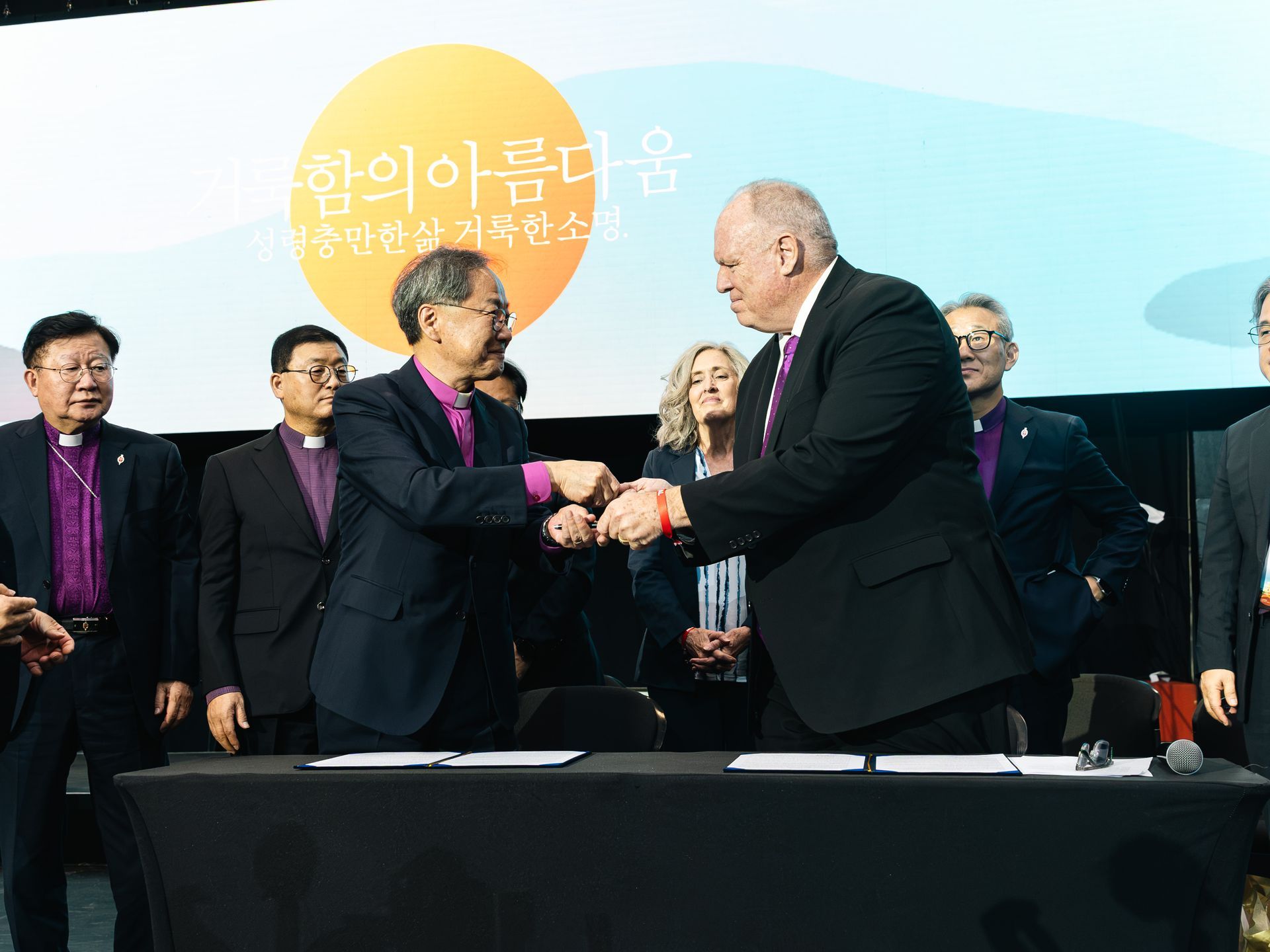
On the fifth day of the General Conference of the Global Methodist Church, delegates set aside the ordinary work of a legislative body to witness the signing of an ecumenical covenant with the Korean Methodist Church – a document the Conference had passed unanimously the day before, and a relationship that reaches back more than a century. “It was truly an honor to have such a strong delegation with us from the Korean Methodist Church,” Bishop Carolyn Moore reflected. The delegation was itself part of the story. Six bishops of the Korean Methodist Church came alongside their president bishop, Kim Jung-seok — a gathering the conference was told is without precedent. Never before have so many Korean Methodist bishops visited a sister denomination's ceneral conference together with the president bishop. Their presence made plain how seriously the Korean church regards this new relationship. They were joined by the general secretary of the Korean Methodist Mission Department and the executive pastor of Seoul's Kwanglim Methodist Church, one of the largest Methodist congregations in the world. Bishop Jeff Greenway introduced the guests and the covenant, an assignment that carries a personal history. Years ago, while president of Asbury Theological Seminary, the late Bishop Kim Sundo – founder of Kwanglim – introduced Greenway to the bishop's son, Kim Jung-seok, and the two became friends. That son now pastors Kwanglim and leads the Korean Methodist Church. Last October, Greenway carried the possibility of a covenant to him, attending the Korean General Conference on behalf of the Assembly of Bishops, where the Korean church ratified the agreement's language. The covenant does not create a bond so much as it names one. The first resident missionaries of the Methodist Episcopal Church, the Reverend Henry Gerhard Appenzeller and his wife, Ella Dodge Appenzeller, stepped ashore at Jemulpo — present-day Incheon — on April 5, 1885. It was Easter Sunday, 141 years ago. Appenzeller gave himself to education, evangelism, and Bible translation, founding the school that grew into Pai Chai Hakdang. That same year, Mary Fletcher Scranton arrived and began teaching Korean girls, establishing what became Ewha Womans University. In the century and a half since, the Korean Methodist Church has flourished into one of the great centers of Methodism. Jung-seok described a church of nearly 6,700 congregations, some 10,000 pastors, and 1,400 missionaries sent across the world. Most Methodists in the Global Methodist Church's Korean American Conference can trace their heritage directly to it. Speaking to the assembly, Jung-seok reached back to that first Easter arrival and forward to the church's calling now – a mission that transcends denomination, moving from personal to social holiness in the spirit of John Wesley. “It is my sincere hope," he said, "that our Methodist churches will remain partners eternally.” The Korean signing stood alongside the Conference's covenant relationships with the Methodist churches of Costa Rica and Nigeria, whose representatives were welcomed as witnesses. Moore set the partnership in that larger context. “Our relationships within the global church are important,” she said. “They are how we engage in conversations about the advance of Christianity and how we care for and support the Body of Christ, especially in those places where the Church is persecuted and needs the encouragement of the larger Body. In this spirit, we have entered into this special relationship with the Korean Methodist Church. We recognize that all our covenant relationships are lived out in the local church, as our churches partner together to build relationships.” Greenway and a group of Global Methodists will represent the GMC at the Korean Methodist General Conference later this year to sign the same covenant before their delegation. “These acts of unity are one way we can participate in making the Bride of Christ ready for his return,” said Moore. The assembly extended its hands toward the guests and prayed a blessing over the covenant now begun, asking that what was signed on earth be ratified in heaven. What began 141 years ago on an Easter morning at Incheon had, in Johannesburg, been carried one step further along the same road.
By Tyler Best September 3, 2026
Connectional Operations Officer Mike Schafer opened his report to the General Conference on Thursday afternoon with a number he insisted he needed artificial intelligence to reach: 707 days. That is how long it had been, he told delegates at the Sandton Convention Centre, since the Global Methodist Church closed its convening General Conference in San José, Costa Rica — 707 days he described as “craziness and chaos and excitement and watching what God is doing.” The transformation over that span, as Schafer's figures show, was striking. The church left Costa Rica with roughly 4,700 congregations; as of Thursday morning, he reported, it numbered 7,250. Its annual conferences had grown from 36 to 55, with six emerging areas that may soon become annual conferences of their own. The statistic he said he loved most: since Costa Rica, the number of annual conferences outside the United States has more than doubled. A Church that departed Central America as “a bunch of former United Methodists,” he said, had become the Global Methodist Church. Schafer credited the leaders elected two years ago who, in his telling, “had no clue what they were getting into” – an Assembly of Bishops now leading with passion for the Church's mission, a Connectional Council divided evenly between clergy and laity whose behind-the-scenes work he said he could speak about for his entire allotted time, and seven commissions and the Global Episcopacy Committee whose labor he called “amazing” to watch. The Connectional Council on Appeals, he noted, is now up and running and issued its first ruling during the week of the Conference. He offered particular thanks to Keith Boyette, present in the hall, who had poured into him during his first month on the job. On finances, Schafer said the Church that left Costa Rica in a good position now stands in “an amazing financial position,” and he credited the local churches and their generosity. He reminded the body that each local church is encouraged to give one percent to the global Church — funding the bishops, the commissions, the meetings of the Connectional Council, and the denominational staff. That giving, he said, had produced not merely a surplus over the past two years, but a large one. The surplus paid for the General Conference itself, including fully covered travel for every delegate from outside the United States. In addition, distributions were made to every annual conference for the new ministerial training fund, which conferences could pass along to those preparing for ministry or share with partner conferences. He also prepared delegates for a significant shift ahead. Until now, the Church has carried only a few full-time bishops, most serving part time on part-time salaries without benefits. Beginning in November, eight full-time bishops will receive full salaries and benefits — a change Schafer said would dramatically reshape next year's budget, and one he thanked the body for making possible with confidence. Noting that his full written report was available to read in the pre-conference workbook , Schafer instead used his remaining time to honor the people he works alongside. Living out the church's value of a lean structure, he said, a staff of just 19 — 13 full-time and six part-time — serves 7,250 congregations worldwide, handling finances, communications, information technology, endorsement ministries for chaplains and counselors, administration, and benefits. He called those present to stand and be recognized as “warriors.” Two colleagues drew special tribute. Tom Lambrecht, the General Conference Secretary and one of the pioneers of the movement, will retire at the close of this General Conference, remaining until the new “Book of Doctrines and Discipline” is published; Schafer called him “a jewel of a man” and announced a bronze sculpture of John Wesley would be sent after the conference. He also honored Rhonda Bourgeois, who has given the church some 50 hours a week of information technology work for years without pay – labor without which, he said, Costa Rica “would not have happened.” With the hiring of Jonathan Leung as the new director of IT, Schafer said, the hope is to “give Bourgeois her life back.” He closed on the 707 days behind and the promise of what might come in the next 707 and beyond, returning to the words of Jesus in Matthew 19:26: “for mortals it is impossible, but for God all things are possible.”
By Tyler Best September 2, 2026
“Push your chairs back a little.” It was not the instruction delegates might have expected to open the fourth morning of the 2026 General Conference, but the Rev. David Sablan Jr. had opened his Bible to Psalm 150, and he intended the whole psalm — praise with the tambourine and dancing, praise with a clash of cymbals, everything that has breath giving praise to the Lord. What followed at the Sandton Convention Centre carried the unmistakable warmth of a Filipino revival meeting: laughter, an invitation to greet a neighbor, and a room of bishops and delegates on their feet, coaxed into offering God the best of their energy before the preaching had properly begun. Sablan brought that exuberance from the Mega Manila Annual Conference, where he serves as Conference Evangelist and Chairman of the Board of Ministry. He was among the pastors who helped plant the conference, which has multiplied from a small band of congregations to more than fifty and now reaches Filipino believers scattered across the Middle East and Europe. An evangelist and revivalist who has spent decades calling people to Christ, he makes his home with his wife, Jomel, in the province of Cavite — a country, he noted with a grin, of “7,100 islands during low tide, and 7,000 during high tide.” He confessed to knowing the “proverb” that blessed are the pastors who keep their sermons short, “for they shall be invited again,” before adding the caveat that governs an evangelist’s clock: “when the Holy Spirit moves, the clock stops.” His text was 1 Peter 1:15–16: “As he who called you is holy, be holy yourselves in all your conduct…’you shall be holy, for I am holy.’” Before drawing out what such a life looks like, Sablan named what he sees pressing against it. Secularism and liberalism, he warned, have seeped so far into the culture — and into the churches — that the world now shapes the Church at least as much as the Church shapes the world. The recovery he called for was not a strategy but a return to the authority of Scripture and the restoration of “biblical integrity.” For holiness, in his telling, is always mediated through and grounded in the Word of God. He even pressed the command into his own Tagalog, teaching the room to say it back to him: maging banal ka — be holy. From there, the sermon unfolded in three movements — a life shaped by Scripture, sourced in the Spirit, and reflecting God’s own character. Holiness, Sablan insisted, is never manufactured. “He will generate what you cannot create,” he said of the Spirit, naming the fruit that no program can produce. He was blunt about the counterfeit: churches with many activities and little adoration, much machinery and scant power. “God wants to be seen,” he pressed. “But the question is, do we want to see God?” Holiness, he preached, is nothing less than “radiant beauty — the splendor of God reflected in his people.” He returned again and again to a single question, inviting delegates to ask it of themselves and their ministries: when others marvel at your transformation or your success, what is your answer? “Jesus is my because ,” he declared. “Who is your because ?” That question turned, near the end, toward the very work the delegates had traveled to Johannesburg to do. Borrowing the image from “Holy, holy, holy” of the saints casting their crowns before the throne, Sablan named the milestones of a historic gathering — the petitions the conference would affirm, the decisions it would discern, and, choosing his words with care, “the calling of our bishops.” “I didn’t say the election of bishops,” he pointed out, nudging the room toward reverence rather than mere procedure. None of it, he charged, may be clutched as a human accomplishment: “All this must not be held as our own. They belong to God.” Even the denomination’s remarkable growth — more than seven thousand congregations across more than fifty annual conferences — he laid at the same throne, crediting not the Church’s labor but the Spirit who multiplies disciples across the earth. From worship, the delegates would rise to petitions and plenary, to the ordinary and consequential labor of a General Conference. But the morning had already fixed the terms. The people called Global Methodist exist, Sablan reminded them, for one mission — to make disciples of Jesus Christ and to spread the beauty of scriptural holiness across the globe — and that mission rests on a personal foundation the Church cannot delegate. As John Wesley had put it, and Sablan made his own: “Without being holy myself, I cannot promote real holiness in others.” Be holy in all you do, the charge had come — because the One who calls is holy.