By Tyler Best
•
September 4, 2026
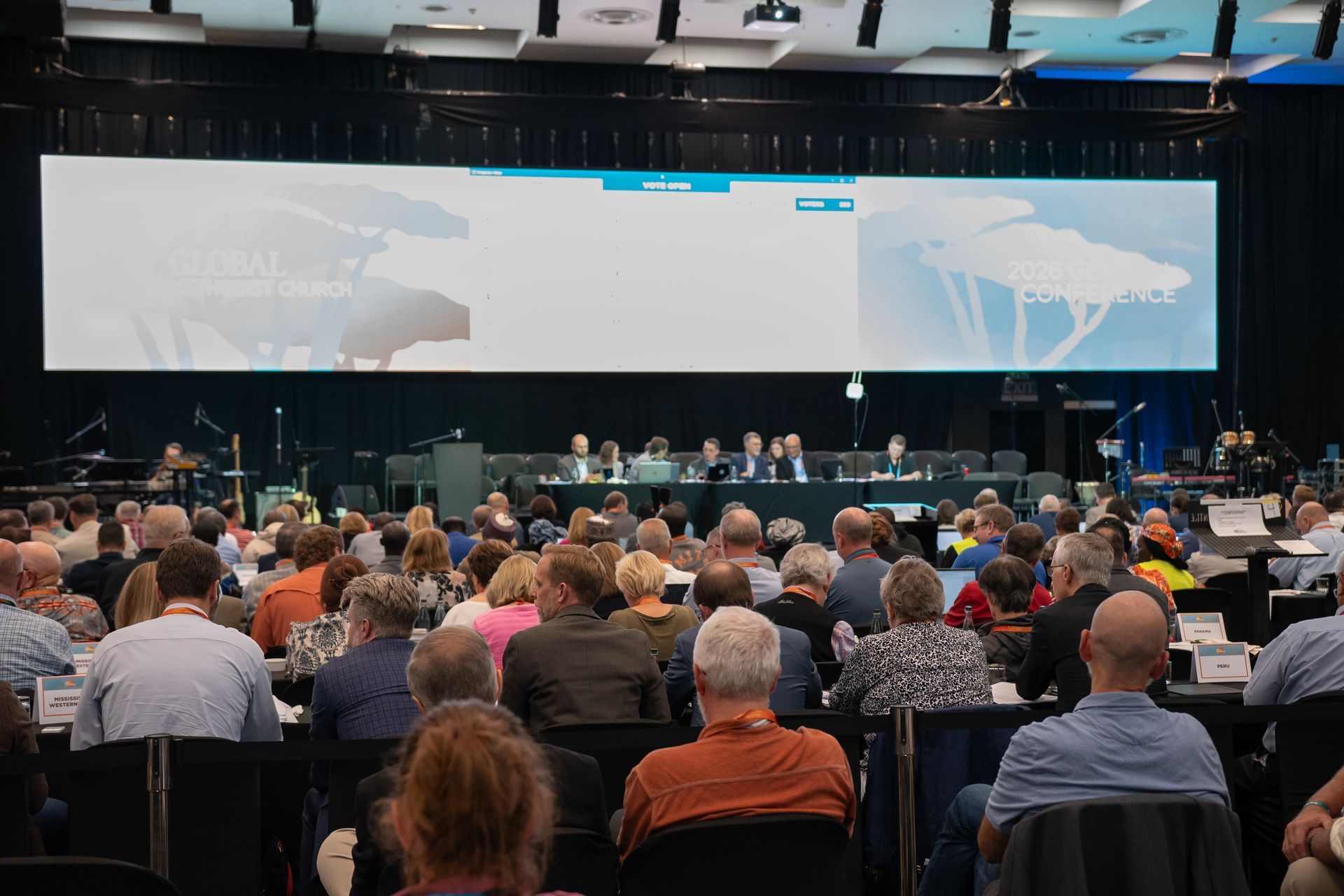
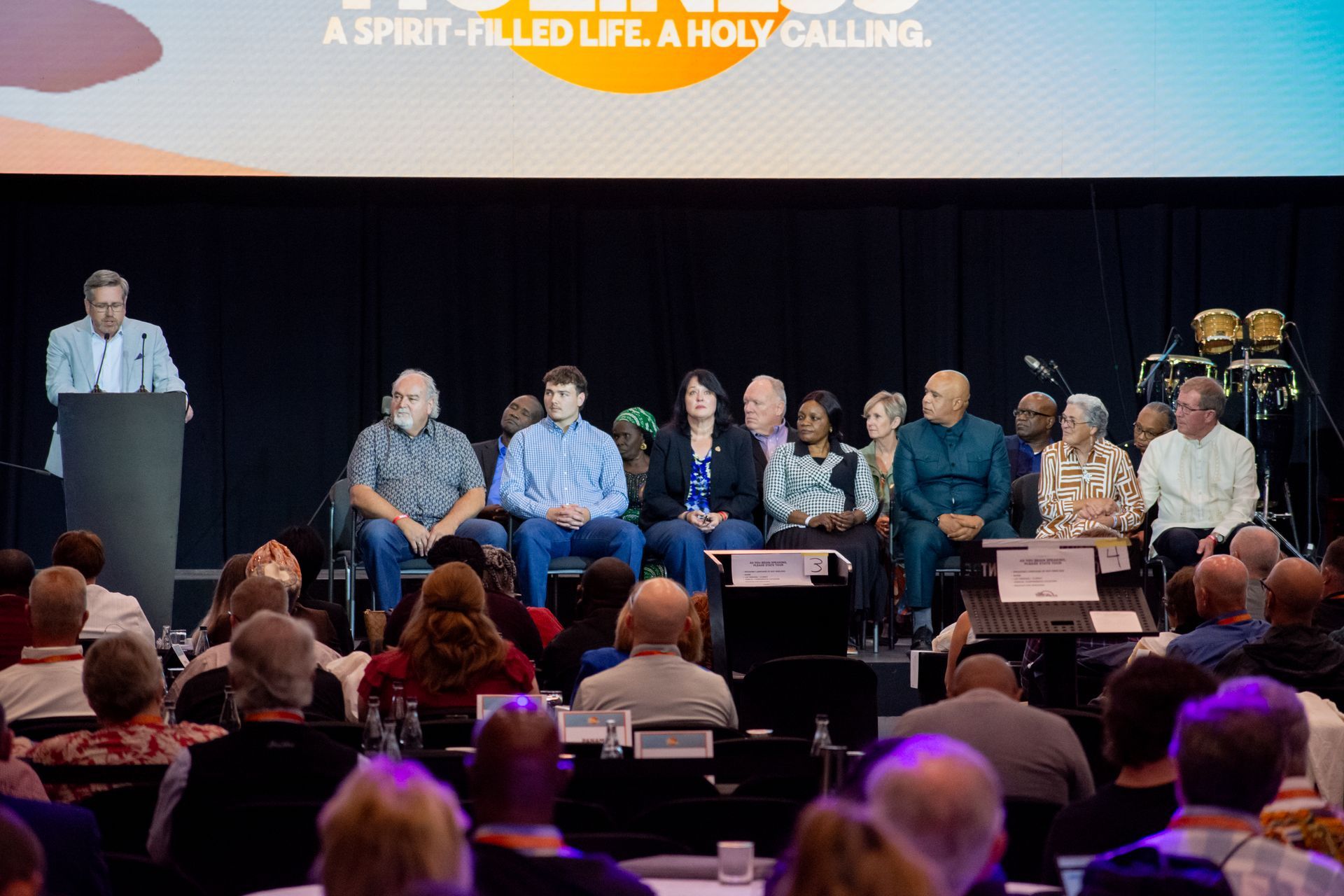
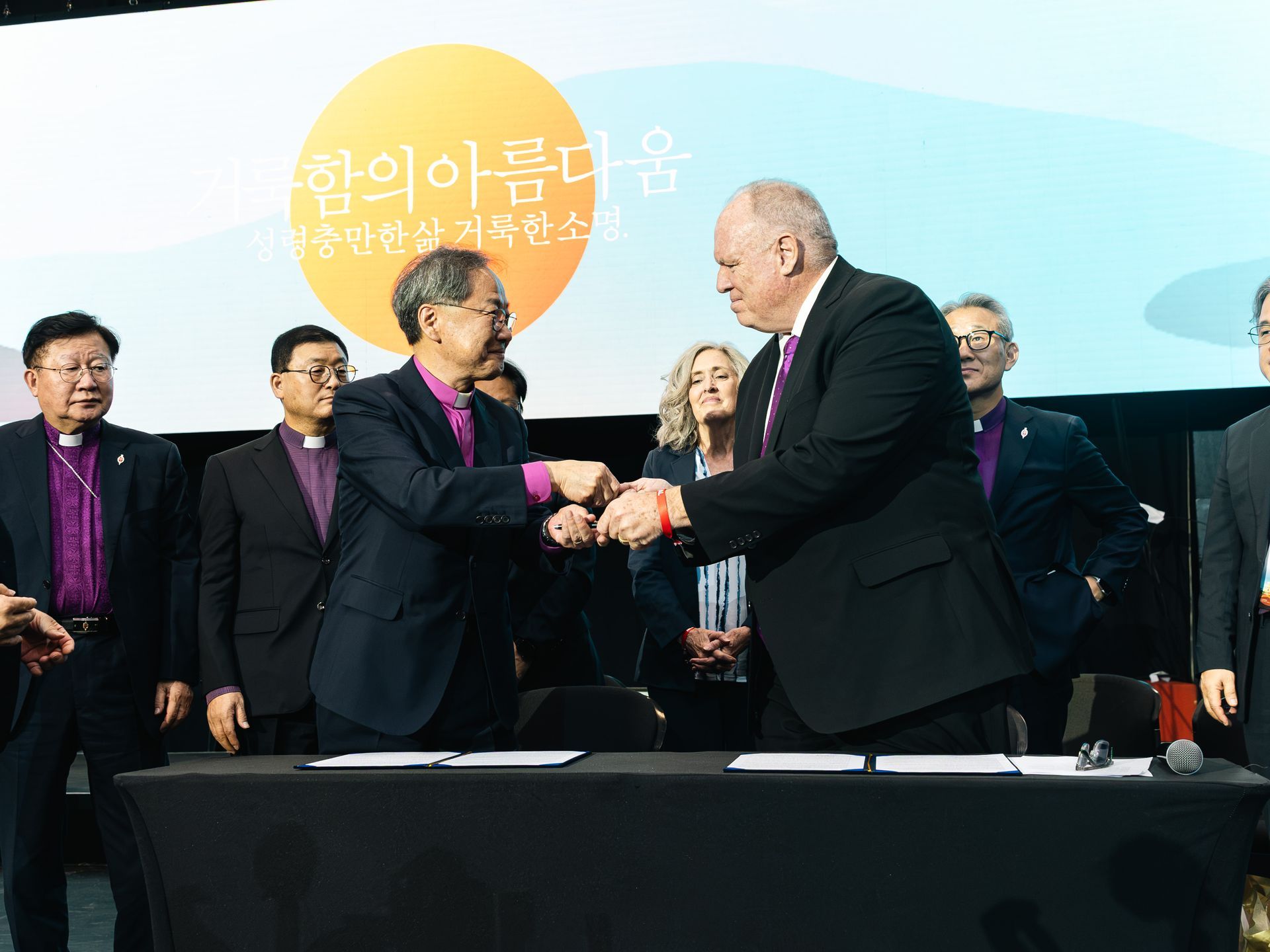
Some of a General Conference's most consequential work makes the least noise. After the anticipation of Wednesday's episcopal ballots and the celebrations that followed, Friday's legislative sessions at the Sandton Convention Centre turned to a quieter but no less important task — electing the clergy and laity who will carry the ongoing work of the Global Methodist Church through its councils, commissions, and committees. These are the bodies named in the “Book of Doctrines and Discipline” that steward the life of the Church between general conferences: a majority of church members, clergy and laity together, entrusted with doctrine and discipleship, finance and mission, ecumenical friendship and the good order of the connection. What follows is a brief explanation of each body, with the unofficial results of Friday's elections placed beneath — a picture of a Church naming its stewards for the 2026–2032 sexennial. With the official daily journal still to come tomorrow, these results are shared as a first, unofficial account — a way to bring the news to the Church now rather than hold it back. The Connectional Council serves as the Global Methodist Church's chief missional and administrative body between sessions of the General Conference. Functioning as the denomination's leadership team, it helps guide the Church's direction, implement its vision, and coordinate ministry efforts at the general church level. Delegates elected four clergy and four lay members, with the Council itself choosing its officers and the Connectional Council adding a further four members for balance and expertise. Clergy: Luciano Pereira da Silva (Panama), Gabriella Kopas (Central Europe), Jessica LaGrone (Trinity), and Henriette Okele (Democratic Republic of Congo) Laity: Gene Floore (Alabama Emerald Coast), Juliet Jere (Malawi), Sheela Shankar (India), and Tammy Stott (North Carolina) The Connectional Council on Appeals serves as the highest judicial body within the Global Methodist Church. Its purpose is to ensure that the actions, legislation, and governance of the Church remain consistent with the” Book of Doctrines and Discipline,” the foundational guide for doctrine, polity, and practice in the denomination. Delegates elected four clergy and three lay members, along with an equal number of alternates. Clergy: Steven Bell (Trinity), Daniel Fulton (Mid-South), and Richard Jones (West Plains) Clergy alternates: Ebenezer Belleh (Grain Coast), Elliot Chikwenjere (Zimbabwe), Paul Idi (Northeast Nigeria), and Sungwon Nam (Korean-American) Laity: Ron Enns (West Plains), Beatrice Iliya (Northern Nigeria), and Vicky Johnson (Trinity) Lay alternates: James Bannister (South Carolina), Martina Lukic (Central Europe), and Gideon Salatan (Covenant Philippines) The Conferences Commission exists to support the strategic growth and organization of the Global Methodist Church around the world. It makes recommendations to the Assembly of Bishops, the Connectional Council, and the General Conference regarding the creation, restructuring, or modification of annual conferences — the regional bodies through which the Church carries out its work. Delegates elected six clergy and six laity, with no additional members to be added. Clergy: Clark Atkins, Jr. (Trinity), Jonathan Lee (Upper Midwest), Michael Morrissey, Jr. (Mid-South), John Howard (North Carolina), Wilton Odongo (Kenya), and Alban Amour Gonda Yagozo (Central African Republic) Laity: Kirsten Mains (Great Lakes), James Massaquoi (Grain Coast), Brayan George Mwakalinga (Tanzania), Pauline Ntombura (Afrika Makarishi), Lori Smith (Mississippi-West Tennessee), and Mickey Wheeler (Mid-Texas) The Discipleship, Doctrine and Just Ministry Commission guides how the Global Methodist Church fosters discipleship and ongoing spiritual growth across every level of the Church, developing programs, classes, bands, and other small-group resources that support formation in Christ. It was this commission, chaired by Dr. David Watson, whose work produced the proposed combined Articles of Faith that is being taken up this week. Delegates elected ten members — five clergy and five laity — with the Connectional Council able to add up to five more. Clergy: Kenneth Collins (Mid-South), Martin Longanga (Democratic Republic of Congo), Suzanne Nicholson (Mid-South), Dennis Obadiah (Southern Nigeria), and Virgilio Olonan (Covenant Philippines) Laity: Pau Ayi-Bonte (Eastern Russia-Central Asia), Elena Melnikova (Central Russia), Krista Pettit (Northeast), Kathy Rohrs (Allegheny West), and Nolizwi Stofela (South Africa) The Ecumenical Relationships Commission strengthens the Church's ties with the broader body of Christ, bringing recommendations to the Assembly of Bishops and the Connectional Council concerning the denomination's participation in councils and networks of Christian bodies, as well as covenants or potential unions with other churches — the very work embodied this week in the covenant signed with the Korean Methodist Church. A bishop chairs the commission; delegates elected four clergy and four laity. Clergy: Samson Muzengeza (Zimbabwe), Debo Onabanjo (Allegheny West), Sakiusa Vakadewatabua, Jr. (Heartland), and Vatroslav Zupancic (Central Europe) Laity: Bridget Douglas (Great Lakes), Kankolongo Johnson (Democratic Republic of Congo), Debbie Smalley (Alabama Emerald Coast), and Elena Sokolova (Northwest Russia-Belarus) The Finance, Administration, Pensions, and Benefits Commission exists to support faithful stewardship, integrity, and transparency at every level of the connection. Appointed by the General Conference and reporting to the Connectional Council, it provides financial oversight, legal support, and guidance in matters of retirement, benefits, and recordkeeping. Delegates elected ten members, with the Connectional Council able to add up to five more. Clergy: Harrison Bell (Alabama Emerald Coast), Vivian Kinnear (Trinity), James Noble (Mid-Texas), and Matthew Seel (Mid-South) Laity: Sherry Austin (Great Lakes), Olandor Boyce (Grain Coast), Lyndsey Clark (North Carolina), Sam Gregory (West Plains), Joy Perry (Allegheny West), and Luvo Thwethwa (South Africa) The General Conference Commission is responsible for planning and coordinating every aspect of the Church's General Conferences. It determines the number of legislative committees, oversees the assignment of materials to delegates, and recommends updates to the Plan of Organization and Covenant for Our Life Together. Delegates elected sixteen members, at least half of them laity, with the Connectional Council able to add up to eight more. Clergy: Mbingeleli Diko (South Africa), Mike Grant (Allegheny West), Joy Griffin (North Georgia), Ben Huebner (Mid-Texas), Charles Puno (Mega Manila), and Nicolas Munongo Sukisa (Democratic Republic of Congo) Laity: Elizabeth Fink (Trinity), Dana Gilliam (North Alabama), Ephraim Ibrahim Jen (Southern Nigeria), Inna Kim (Central Russia), Bridget Kirk (Heartland), Muriel Nelson (Grain Coast), Walter Oduke (Kenya), Giftson Rajan (India), Stacy Taylor (Northeast), and Mandy White (West Plains) The Global Episcopacy Committee oversees the election of bishops, provides human-resources and administrative support for their ministry, and processes concerns in keeping with the Church's Judicial Practice and Procedures — the body that guided this week's historic episcopal elections. Its nominees were chosen by the Connectional Council, as prescribed by the “Book of Doctrines and Discipline,” and delegates elected six clergy and six laity, each by a sixty-percent vote. Clergy: Jason Burnham (Trinity), Robin Parr (North Georgia), Chris Ritter (Great Lakes), Joanne Turmalip Valenzuela (Mega Manila), Aaron Opa Yankee (Grain Coast), and Kira Yufereva (Central Russia) Laity: Don Bourland (Mississippi-West Tennessee), Patrick Chibhagidhi (Zimbabwe), Brad Folsom (South Georgia), Tyson Heins (Heartland), Sarah Maher (Allegheny West), and Ievgenii Semashko (Bulgaria) The Kingdom Advancement Commission — officially the Evangelism, Church Multiplication, Missional Mobilization, and Disaster Response Commission — equips and supports local churches, annual conferences, and the general church in fulfilling the denomination's mission, working through three focused subcommittees. Delegates elected eleven members — six laity and five clergy — with the Connectional Council able to add up to six more. Clergy: Failuma Afeaki (Western States), Wes Griffin (North Georgia), Patrick Magaqa (South Africa), Laura Saffell (Allegheny West), and Martin Kasongo Wakubatwa (Democratic Republic of Congo) Laity: Diana Briselli (Northeast), Bill Brown (Heartland), Robby Kalitongi (Zambia), Elena Lyovushkina (Southern Russia), Mariela Mihaylova-Siderova (Bulgaria), and Angelo Perez (Covenant Philippines) The Ministry and Higher Education Commission is responsible for implementing standards across all forms of ordained and lay ministry within the Church, including certifying the educational programs that train lay ministers, deacons, and elders. Delegates elected ten members — five clergy and five laity — with the Connectional Council able to add up to five more. Clergy: Daniel Gildner (Allegheny West), Kora Mujinga (Democratic Republic of Congo), Thadius Sales (Northeast), Leslie Tomlinson (Mid-Texas), and Brian Ebel (Mid-South) Laity: Diana Cabauatan (Covenant Philippines), Jane Finley (North Georgia), Leesa Judd (South Carolina), Kelvin Kofi (Eastern Russia-Central Asia), and Catherine Sullivan (Trinity)